
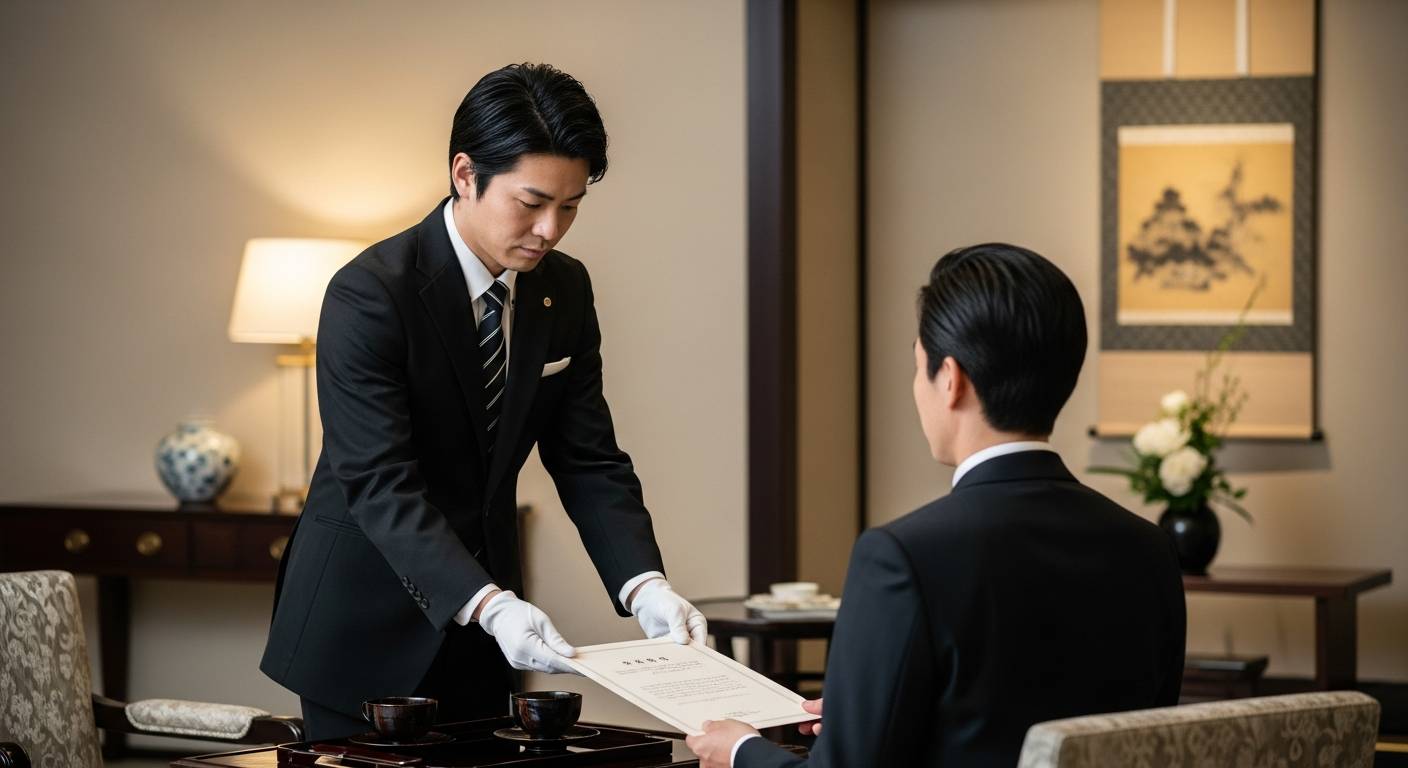
Have you ever wondered what happens behind the closed doors of Japan’s most exclusive residences and luxury hotels? The world of high-net-worth individual (HNWI) butler services in Japan remains largely veiled in discretion and mystery—until now. As Japan continues to attract ultra-wealthy visitors and residents from around the globe, the demand for exceptional personalized service has created an elite tier of hospitality professionals operating in the shadows of luxury.
This rare glimpse into “The Secret World of HNWI Butler Services” reveals the meticulous training, cultural nuances, and extraordinary lengths that Japanese butlers go to in service of their distinguished clientele. From the traditional values of Omotenashi (Japanese hospitality) to the modern demands of international elites, we explore how Japan has developed its own distinctive approach to supreme butler service.
Whether you’re fascinated by luxury lifestyle management, considering such services for yourself, or simply curious about this hidden profession, this insider’s perspective will transport you into a world few ever get to experience. Join us as we uncover the exclusive rituals, unspoken expectations, and astonishing requests that define Japan’s elite hospitality industry—where discretion meets perfection, and where the impossible becomes merely a challenge to be elegantly overcome.
1. The Exclusive Rituals: How Japan’s Elite Butlers Create Unforgettable Experiences for the Ultra-Wealthy
Behind the ornate doors of Japan’s most prestigious residences and luxury hotels exists a world few ever glimpse – the meticulous universe of high-net-worth individual (HNWI) butler services. These elite professionals operate with a level of precision and discretion that transforms hospitality into an art form rarely witnessed by the general public.
Japanese butler service for the ultra-wealthy begins long before the client ever notices. At establishments like the Hoshinoya Tokyo or The Peninsula Tokyo, head butlers maintain detailed dossiers on each guest – their temperature preferences, dietary restrictions, favorite flowers, and even the firmness of pillows they prefer. This information is meticulously updated after each visit, ensuring a seamlessly personalized experience that appears effortless but represents hours of behind-the-scenes preparation.
The morning ritual of an elite Japanese butler typically begins at 4:30 AM, preparing the residence or suite before the client wakes. This includes precise temperature control, freshly pressed newspapers, and personalized breakfast preparations that often incorporate seasonal ingredients sourced from specific regions of Japan. At the Mandarin Oriental Tokyo, butlers are trained to adjust lighting throughout the day to complement the client’s circadian rhythm – a subtle touch that guests feel rather than notice.
What truly separates Japanese butler service from its Western counterparts is the incorporation of “omotenashi” – the philosophy of wholehearted hospitality without expectation of reward. Elite butlers at properties like Aman Tokyo undergo at least three years of specialized training, learning everything from kimono dressing assistance to the perfect 45-degree bow. They master the art of anticipating needs while remaining nearly invisible, a skill described by one private household butler as “becoming like air – essential yet unnoticed.”
For Japan’s ultra-wealthy, these butlers coordinate experiences unattainable to most: private viewings of national treasures normally closed to the public, after-hours access to renowned gardens, or securing reservations at exclusive kaiseki restaurants years in advance. One Tokyo-based private butler described arranging for a client to experience a tea ceremony with a 16th-generation tea master inside a historical temple normally closed to visitors – an experience that required six months of negotiations and special permissions.
The dedication extends to extraordinary lengths. When a foreign billionaire client mentioned a passing fondness for a specific seasonal wagashi from Kyoto, their butler at The Ritz-Carlton arranged for the confection to be handmade and delivered daily via bullet train for the remainder of their three-week stay. Such extravagant gestures are considered simply part of the job in this rarefied profession.
This level of service comes at an extraordinary premium. Private household butlers for Japan’s elite families command salaries starting at ¥15 million annually, while luxury hotels charge anywhere from ¥100,000 to ¥500,000 per night for their highest butler-serviced accommodations. The investment reflects not just luxury, but access to a network of connections that can open doors to Japan’s most guarded experiences.
2. Behind Closed Doors: What HNWI Clients Really Expect from Japan’s Top Butler Services
The expectations of High Net Worth Individuals (HNWIs) in Japan extend far beyond conventional hospitality services. Behind the discreet doors of Japan’s most exclusive residences and establishments, a fascinating dynamic between butler and client unfolds, shaped by unique cultural nuances and exacting standards that remain largely invisible to the general public.
Japanese HNWI clients typically demand an extraordinary level of anticipatory service. The most skilled butlers in Tokyo, Kyoto, and other affluent areas don’t merely respond to requests—they anticipate needs before clients themselves recognize them. This might mean preparing a specific tea at precisely the right temperature moments before a client typically desires it, or arranging transportation contingencies during typhoon season without being asked.
Privacy stands as the cornerstone of these relationships. Unlike the Western approach to luxury service, which sometimes embraces visibility and showmanship, Japanese HNWI butler services operate with remarkable discretion. Top butlers from agencies like Tokyo Premium Services or The Marunouchi Butler Company understand that their greatest achievement is often invisibility—being present exactly when needed and completely absent when not.
Communication styles represent another crucial expectation. Japanese HNWIs frequently prefer non-verbal understanding and subtle cues rather than direct requests. This creates a demanding environment where butlers must become experts in reading microexpressions and understanding unstated preferences. Many elite butler academies in Japan now incorporate specific training in non-verbal communication alongside traditional service skills.
Perfection in cultural knowledge is non-negotiable. Whether it’s understanding the correct seasonal kaiseki presentation for international guests, knowing which specific sake to serve based on subtle conversational cues, or maintaining awareness of appropriate gift-giving protocols for business associates, Japanese HNWIs expect butlers to be cultural ambassadors capable of navigating complex social dynamics flawlessly.
The technological expectations have evolved significantly as well. Modern Japanese HNWIs expect their butlers to seamlessly integrate traditional service elements with cutting-edge technology. This might include managing smart home systems, coordinating complex international video conferences, or utilizing specialized apps for tracking preferences and schedules while maintaining absolute data security.
Perhaps most interestingly, many Japanese HNWIs place extraordinary value on the butler’s ability to create moments of emotional resonance. Beyond technical perfection, there exists an expectation for service that touches something deeper—what might be called the poetry of service rather than merely its prose. This might manifest as arranging a private viewing of cherry blossoms at precisely the perfect moment of bloom, or securing reservations at an establishment that holds particular sentimental value rather than simply the most exclusive option.
Elite butler services in Japan represent a fascinating intersection of traditional values and modern expectations, where success is measured not by what is seen, but by what remains invisible to all except those with the most discerning eye.
3. From Billionaires to Royalty: 5 Astonishing Demands Japanese Butler Services Actually Fulfilled
The ultra-wealthy have expectations that transcend ordinary service standards, and Japan’s elite butler services pride themselves on fulfilling requests that would seem impossible to most. These discreet professionals operate in a world few ever glimpse, catering to billionaires, royal families, and global celebrities with unwavering dedication. Here are five extraordinary demands that top Japanese butler services have actually managed to fulfill, offering a rare window into this exclusive realm.
A butler at Tokyo’s prestigious Halekulani Okinawa once received an urgent midnight request from a Middle Eastern royal who desired fresh white truffles for breakfast. Within hours, the butler coordinated with contacts in Italy, arranged a private courier, and had the rare delicacies flown directly to Okinawa, prepared precisely to the royal’s specifications by morning.
For a tech billionaire staying at Aman Tokyo, a butler was tasked with recreating the client’s childhood birthday cake based solely on a vague description. The butler tracked down the original bakery in a small European village, obtained the recipe through personal connections, and had the pastry team recreate it with meticulous authenticity—bringing tears to the billionaire’s eyes.
Perhaps most impressive was the butler team at The Peninsula Tokyo who fulfilled a request to transform an entire suite into an authentic tea house for a traditional ceremony within three hours. They sourced genuine tatami mats, antique tea implements, and even arranged for a revered tea master to perform a private ceremony—all while the guest was attending a business meeting.
A Hollywood celebrity staying at Hoshinoya Tokyo requested a specific vintage kimono they had seen in an obscure art book. The head butler personally visited seven private collections across Japan, negotiated a special one-day loan from a museum archive, and arranged for the garment to be properly displayed in the guest’s suite with its complete historical provenance.
Finally, a Russian oligarch’s impossible-sounding request for fresh snow from Mount Fuji for his daughter’s birthday party in summer was actually fulfilled by Andaz Tokyo’s butler service. They dispatched a team to preserved snow reserves maintained by traditional ice masters, arranged special refrigerated transport, and created a magical snow experience in the penthouse suite—complete with authentic mountain minerals and composition.
These extraordinary examples represent the philosophy of Japanese omotenashi at its highest level, where “no” simply isn’t in the vocabulary. The elite butler services of Japan have elevated hospitality to an art form where the impossible becomes merely a challenge to overcome with discretion, creativity, and unwavering dedication.