
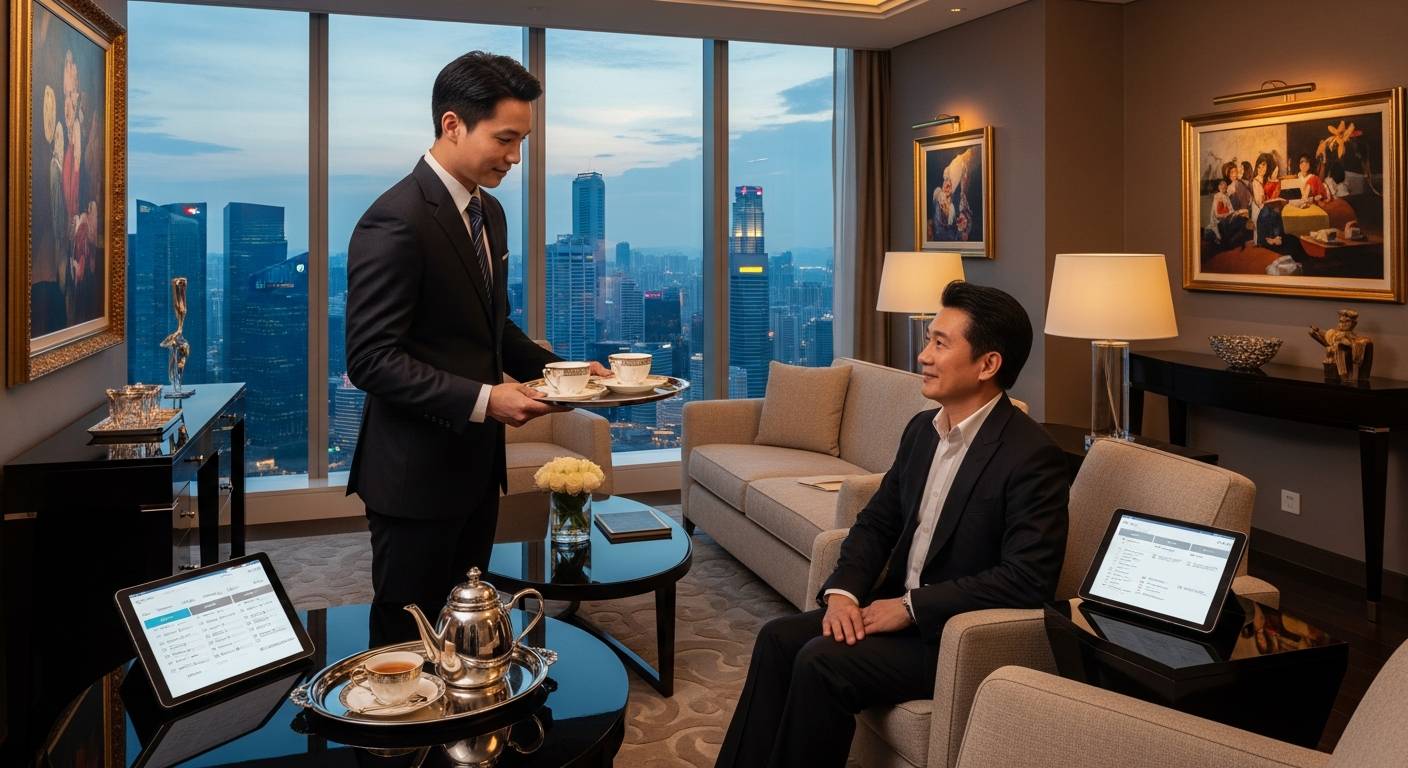
When it comes to luxury lifestyle management, a significant shift is occurring across Asia’s ultra-wealthy households. The traditional role of butlers has evolved far beyond the stereotypical British manor house servant, transforming into sophisticated lifestyle architects for Asia’s billionaires and business elite. This transformation reflects not only changing wealth patterns in the region but also a deeper appreciation for Japanese Omotenashi principles and personalized concierge services that seamlessly blend Eastern and Western hospitality traditions.
In recent years, we’ve witnessed an unprecedented demand for professionally trained butlers who understand the unique cultural nuances of Asian HNWI (High-Net-Worth Individuals) while delivering world-class service standards. This blog explores how this exclusive profession is being reimagined to meet the exacting standards of Asia’s most discerning clients, from Tokyo penthouses to Singapore mansions and beyond.
Whether you’re interested in the bespoke training programs preparing the next generation of elite butlers, or simply curious about the discrete world of ultra-luxury lifestyle management, our comprehensive analysis reveals the fascinating evolution of personalized service in Asia’s most privileged households.
1. Exclusive: How Ultra-Wealthy Asians Are Revolutionizing Personalized Butler Services
The discreet world of elite butler services is experiencing a remarkable transformation across Asia’s affluent circles. As wealth in the region continues to grow exponentially, particularly in financial hubs like Singapore, Hong Kong, and Shanghai, demand for highly personalized household staff has reached unprecedented levels. This isn’t merely about traditional butlers in tailcoats – it’s about comprehensive lifestyle management designed specifically for Asia’s ultra-high-net-worth individuals.
Industry insiders reveal that modern Asian billionaires are seeking professionals who combine Western service standards with deep cultural understanding of Asian traditions and social protocols. The result is an emerging hybrid butler archetype who might seamlessly arrange a traditional tea ceremony in the morning and coordinate with a private jet crew by afternoon.
“The requirements have evolved dramatically,” explains a senior trainer at the International Butler Academy who works extensively with Asian clients. “Today’s elite butler in Asia must understand everything from wine appreciation to art collection management, while navigating complex family dynamics particular to Asian households.”
What distinguishes this trend is the emphasis on technology integration. Elite butlers serving Asia’s tech-savvy billionaires are expected to master smart home systems, digital security protocols, and coordinate household operations through proprietary apps developed specifically for their employers. Some households employ dedicated IT staff working alongside butlers to ensure seamless digital and physical service experiences.
Compensation packages reflect this specialization, with top-tier butlers commanding annual salaries exceeding $250,000 plus accommodation in Singapore and Hong Kong, often with performance bonuses tied to family satisfaction metrics. Many receive equity compensation in family businesses, aligning their long-term interests with their employers.
Recruitment agencies specializing in elite domestic staff, such as Quintessentially People and The Butlers Guild, report a 300% increase in requests from Asian clients in recent years, with the most significant growth coming from newly-minted tech entrepreneurs and second-generation wealth inheritors who prioritize privacy alongside exceptional service.
2. The Secret World of Elite Butler Service: Inside Asia’s Ultra-High-Net-Worth Households
Behind the ornate gates and discreet security systems of Asia’s most luxurious residences lies a world few ever witness—the domain of elite butler service. As wealth accumulation across Asia continues its unprecedented growth, particularly in financial hubs like Singapore, Hong Kong, and Shanghai, the demand for meticulously trained household staff has reached extraordinary heights.
The modern Asian butler bears little resemblance to the stereotypical British archetype. Today’s elite service professionals are highly educated individuals—often multilingual, technologically adept, and trained in everything from wine appreciation to cybersecurity. Many have backgrounds in hospitality management from prestigious institutions like École hôtelière de Lausanne or The International Butler Academy.
“Discretion is our religion,” explains one veteran butler who has served three of Asia’s billionaire families. Operating under strict NDAs, these professionals orchestrate flawless household operations while remaining virtually invisible. Their responsibilities transcend basic household management to include private jet arrangements, art acquisition logistics, and even managing digital privacy concerns.
Compensation packages reflect the extraordinary demands placed upon these professionals. Elite butlers in Asia can command annual salaries between $120,000 to $250,000, often supplemented with benefits like private accommodation, international travel, and performance bonuses. The most sought-after professionals—those with experience serving royal households or managing multiple international residences—can negotiate packages exceeding $350,000.
The intimacy of the relationship between ultra-wealthy principals and their butlers creates dynamics unlike any other professional arrangement. These service professionals become the silent custodians of family secrets, witness to both triumphs and vulnerabilities. They coordinate complex family schedules, manage interactions between household staff (often numbering 15-30 individuals in the largest residences), and anticipate needs before they’re expressed.
Training for this rarefied profession has become increasingly specialized. The British Butler Institute and The Guild of Professional English Butlers have established Asian campuses to meet growing demand. Their curricula extend beyond traditional service protocols to include diplomatic etiquette, crisis management, and the cultural nuances specific to serving Asian principals.
The psychological profile of successful butlers reveals individuals with exceptional emotional intelligence, unflappable composure, and an almost preternatural ability to read social situations. The profession attracts those who find fulfillment in creating perfection behind the scenes, rather than seeking recognition.
As wealth continues transferring to younger generations across Asia, butler services are evolving accordingly. Tech-savvy professionals now manage sophisticated smart home systems, coordinate digital security measures, and facilitate the blockchain purchases of their principals. The traditional silver service has transformed into a holistic lifestyle management approach tailored to ultra-high-net-worth individuals whose time represents their scarcest resource.
What remains unchanged is the fundamental promise of absolute confidentiality and unwavering loyalty—qualities that cannot be purchased but must be earned through years of impeccable service. In a world where privacy becomes increasingly precious with each additional zero in one’s net worth, the trusted butler remains the ultimate luxury.
3. Beyond Luxury: 5 Ways Asian Billionaires Are Transforming Traditional Butler Services
The concept of butler service has evolved dramatically within Asia’s elite circles, where traditional European-style service has been reimagined through the lens of unprecedented wealth and technological advancement. Asia’s billionaires are not merely employing butlers; they’re revolutionizing the entire profession in ways that reflect both cultural heritage and futuristic vision.
First, we’re witnessing the emergence of tech-integrated butler services. Ultra-high-net-worth individuals in Singapore and Hong Kong increasingly employ butlers who are not just versed in traditional etiquette but also function as digital concierges. These modern professionals manage smart home ecosystems worth millions, coordinate private jets via proprietary apps, and utilize AI systems to anticipate their employers’ needs before they’re even expressed.
Second, cultural fluidity has become non-negotiable. The modern Asian butler navigates multiple cultural contexts effortlessly, often speaking 4-6 languages fluently. In places like Shanghai and Tokyo, butlers are expected to seamlessly transition between local customs and international protocol depending on which global elite their employer is entertaining. The Four Seasons Hotel Hong Kong and Aman Tokyo have responded by developing specialized butler training programs that emphasize cultural intelligence alongside traditional service.
Third, privacy management has evolved into a sophisticated discipline. With heightened security concerns and media interest, butlers for Asia’s ultra-wealthy now coordinate comprehensive privacy protocols. This includes managing digital footprints, vetting staff through advanced background systems, and implementing counter-surveillance measures. Some prominent families in Indonesia and Malaysia employ former military or intelligence professionals as part of their household management teams.
Fourth, wellness expertise has become central to modern butler services. Beyond arranging spa appointments, today’s elite butlers coordinate with personal physicians, nutritionists, and mental health professionals to create holistic wellness regimens. In health-conscious markets like Singapore, butlers may hold certifications in specialized diet preparation or mindfulness practices to support their employers’ wellbeing goals.
Finally, legacy preservation has emerged as a crucial function. Asia’s billionaires increasingly task their most trusted butlers with maintaining family histories and traditions. This includes documenting heirlooms, archiving family photographs digitally, and ensuring that younger generations remain connected to cultural heritage. In China particularly, where rapid wealth accumulation has sometimes outpaced cultural transmission, this aspect of service has become especially valued.
The transformation of butler services reflects Asia’s unique approach to extreme wealth—blending reverence for tradition with bold innovation. For those serving the continent’s billionaires, the profession now demands an extraordinary combination of technological savvy, cultural adaptability, and unwavering discretion that goes far beyond what was expected in previous generations.