
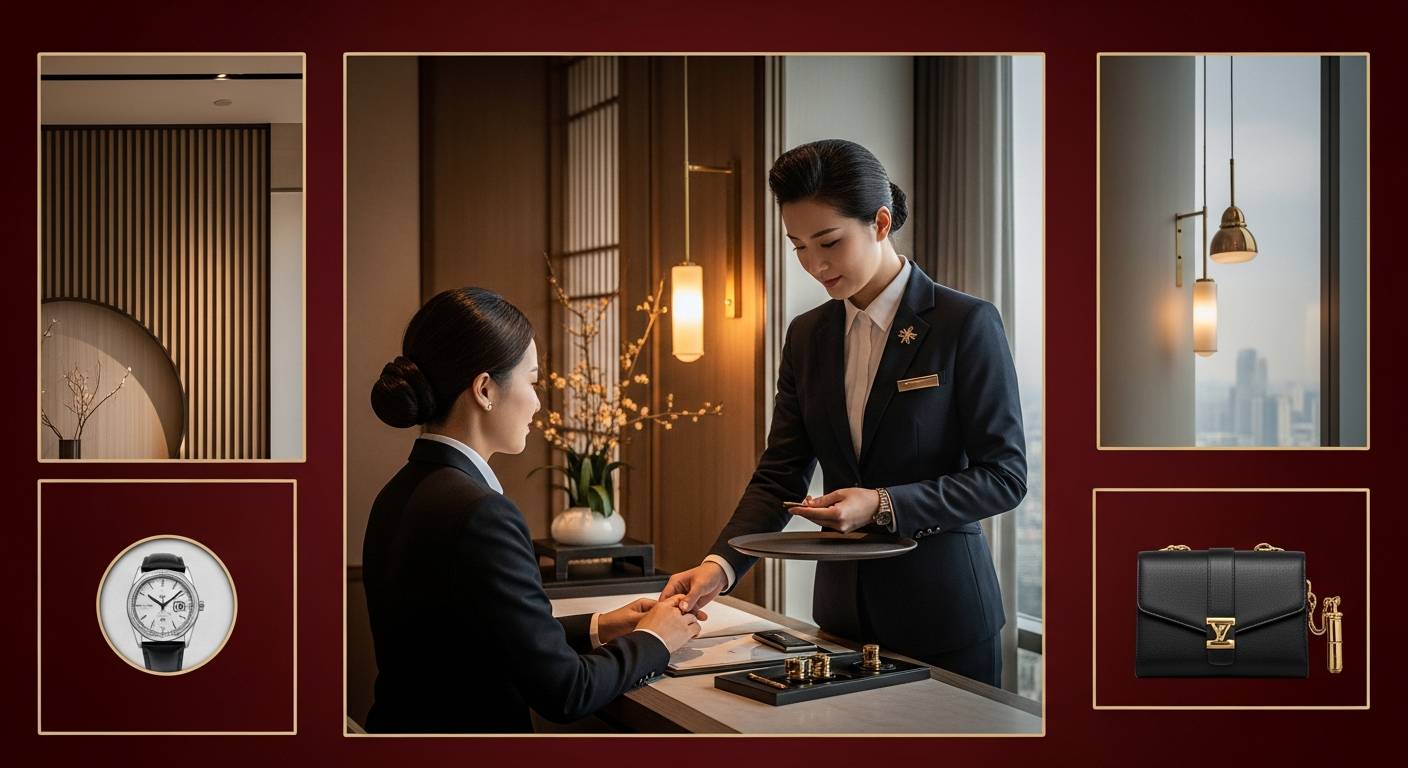
In recent years, Asia has witnessed an unprecedented surge in ultra-luxury personalized support services, creating a fascinating intersection of wealth, culture, and psychology. As the number of High-Net-Worth Individuals (HNWIs) continues to grow across Asian markets, particularly in Japan, China, Singapore, and Hong Kong, the demand for exceptional personalized service has evolved into a sophisticated industry worth exploring. This comprehensive analysis examines the psychological underpinnings that drive the Asian elite to seek the highest levels of personalized support, from dedicated butlers to comprehensive lifestyle management services.
The distinctive blend of Eastern hospitality traditions and Western service methodologies has created unique market dynamics that luxury service providers must navigate with cultural intelligence and psychological insight. Whether you’re a luxury service professional, a market analyst, or simply intrigued by the psychology of wealth and service, this exploration offers valuable insights into how cultural values, status recognition, and trust dynamics shape Asia’s booming personal concierge industry. Join us as we delve into the mindset behind the region’s most exclusive service relationships and uncover what truly drives value in the realm of ultra-personalized luxury support.
1. The Billionaire’s Mind: Why Ultra-Luxury Support Services Are Booming in Asia
Asia’s ultra-wealthy population has created a remarkable ecosystem of personalized support services that goes far beyond traditional luxury. From Singapore to Tokyo, billionaires aren’t simply purchasing products—they’re investing in comprehensive lifestyle management solutions that speak to deep psychological needs.
The ultra-luxury support sector is experiencing unprecedented growth across Asian markets, with personal concierge services, family office management, and bespoke lifestyle solutions expanding at rates of 18-22% annually in major markets like Hong Kong, Singapore, and Shanghai. This surge reflects fundamental shifts in how wealth is perceived and managed in the region.
What drives this phenomenon? Research indicates that Asia’s billionaires display distinct psychological patterns from their Western counterparts. They often place higher value on services that save time, provide absolute exclusivity, and demonstrate cultural understanding. For many, these services function as status markers within extremely competitive social circles.
Companies like Quintessentially Asia and Sincura have mastered this psychology, creating offerings where nothing is impossible—from securing impossible restaurant reservations to arranging private museum viewings at 3 AM. The value proposition isn’t convenience alone but rather the assurance that every aspect of life can be optimized and personalized.
The mainland Chinese market particularly illustrates this trend. As newly-minted billionaires emerge from tech and manufacturing sectors, many seek comprehensive support structures that can help navigate both international business protocols and elite social circles. These services essentially function as shortcuts to cultural capital.
Interestingly, privacy paradoxes abound in this sector. Many ultra-wealthy clients demand absolute discretion while simultaneously expecting service providers to anticipate needs before they’re articulated—a psychological tension that shapes how these businesses operate. This explains why the most successful luxury support companies maintain extraordinarily low client-to-manager ratios, often 8:1 or lower.
The psychological underpinnings of this market reveal much about wealth, status, and identity in contemporary Asian business cultures. As competition intensifies among service providers, understanding these deeper motivational factors becomes increasingly crucial for companies hoping to capture market share in this lucrative segment.
2. Eastern Wealth, Western Service: How Psychology Drives the Asian Luxury Service Revolution
The intersection of Eastern prosperity and Western service methodologies has created a fascinating psychological landscape in Asia’s ultra-luxury market. As wealth accumulates across major Asian economies, particularly in China, Japan, Singapore, and Hong Kong, there’s a distinctive pattern emerging in how luxury services are both delivered and consumed.
Asian affluence brings with it cultural nuances that differ significantly from Western wealth traditions. Family legacy, face-saving, and social standing intertwine with consumption patterns in ways luxury service providers must understand. For instance, the concept of “mianzi” (face) in Chinese culture elevates the importance of personalized service beyond mere convenience—it becomes an essential component of status affirmation.
Luxury concierge services like Quintessentially have recognized this psychological dynamic, adapting Western service excellence to Eastern sensibilities. Their Asian operations don’t merely translate Western protocols; they fundamentally restructure service delivery around Asian psychological needs. This includes understanding the importance of discretion in Japan, where wealth display follows different social codes than in the more ostentatious markets of mainland China.
The psychological framework of Asian luxury service consumption also features a distinctive blend of traditional respect hierarchies with modernized expectations. Staff at Peninsula Hotels across Asia undergo intensive cultural psychology training to navigate these complexities, learning to read subtle cues that might indicate a client’s expectations without explicit communication—a service approach deeply rooted in Eastern communication styles.
What’s particularly noteworthy is how modern Asian luxury consumers increasingly demand authenticity alongside exclusivity. This psychological shift represents a maturation of the market, moving beyond simple brand acquisition toward experiential value. Service providers who recognize this evolution are developing offerings that honor traditional Eastern values while incorporating the efficiency and personalization pioneered in Western luxury sectors.
The psychological interplay between Eastern wealth and Western service methodologies isn’t merely about cultural adaptation—it’s creating entirely new service paradigms that neither region could have developed independently. This fusion is reshaping global luxury standards, with innovations from Asian markets increasingly influencing service protocols worldwide.
3. Inside the Elite Mindset: The Psychological Drivers Behind Asia’s $300B Personal Concierge Industry
The ultra-luxury personal concierge industry across Asia has exploded into a $300 billion behemoth, yet the psychological forces driving this remarkable growth remain largely unexplored. For the elite Asian consumer, personal concierge services transcend mere convenience—they represent a complex interplay of status, face-saving, time valuation, and psychological reassurance that merits deeper examination.
At the core of this phenomenon lies the concept of “face” (面子 in Chinese, 체면 in Korean, 面目 in Japanese)—a cultural cornerstone that permeates decision-making across Asian societies. High-net-worth individuals in financial centers like Singapore, Hong Kong, and Tokyo aren’t merely purchasing services; they’re investing in social capital that reflects their position within carefully structured social hierarchies. As one Singapore-based wealth psychologist explains, “When an executive can delegate the mundane to a premium service provider, it communicates their value is better applied elsewhere—a powerful status marker.”
This psychological dimension helps explain why Asia’s concierge market has outpaced global growth by nearly 18%. Research from McKinsey reveals that Asian ultra-high-net-worth individuals place approximately 40% more value on personalized services compared to their Western counterparts. The psychological comfort derived from having a dedicated professional managing life’s complexities creates a cognitive unburdening that many elite clients describe as “transformative.”
Interestingly, luxury concierge providers like Quintessentially and Aspire Lifestyles have observed a distinct pattern in Asian markets—clients frequently request services not necessarily for personal use but for strategic relationship management. This reflects the interconnected psychological need for both status projection and relationship cultivation central to business cultures across the region.
The paradox of Asian luxury consumption emerges in how discretion and visibility are simultaneously valued. While Western luxury consumption often emphasizes visible displays, Asian elite concierge users frequently seek invisible support systems that nevertheless communicate status through outcomes rather than processes. This subtle psychological distinction has profound implications for service providers entering these sophisticated markets.
The psychology of time valuation further differentiates this market. For Asia’s elite, outsourcing is not merely about convenience but represents a philosophical stance on how personal time should be allocated. This psychological reframing of time as the ultimate luxury resource has transformed how concierge services position themselves—not as helpers but as strategic time management partners for clients who value their cognitive bandwidth as their scarcest resource.