
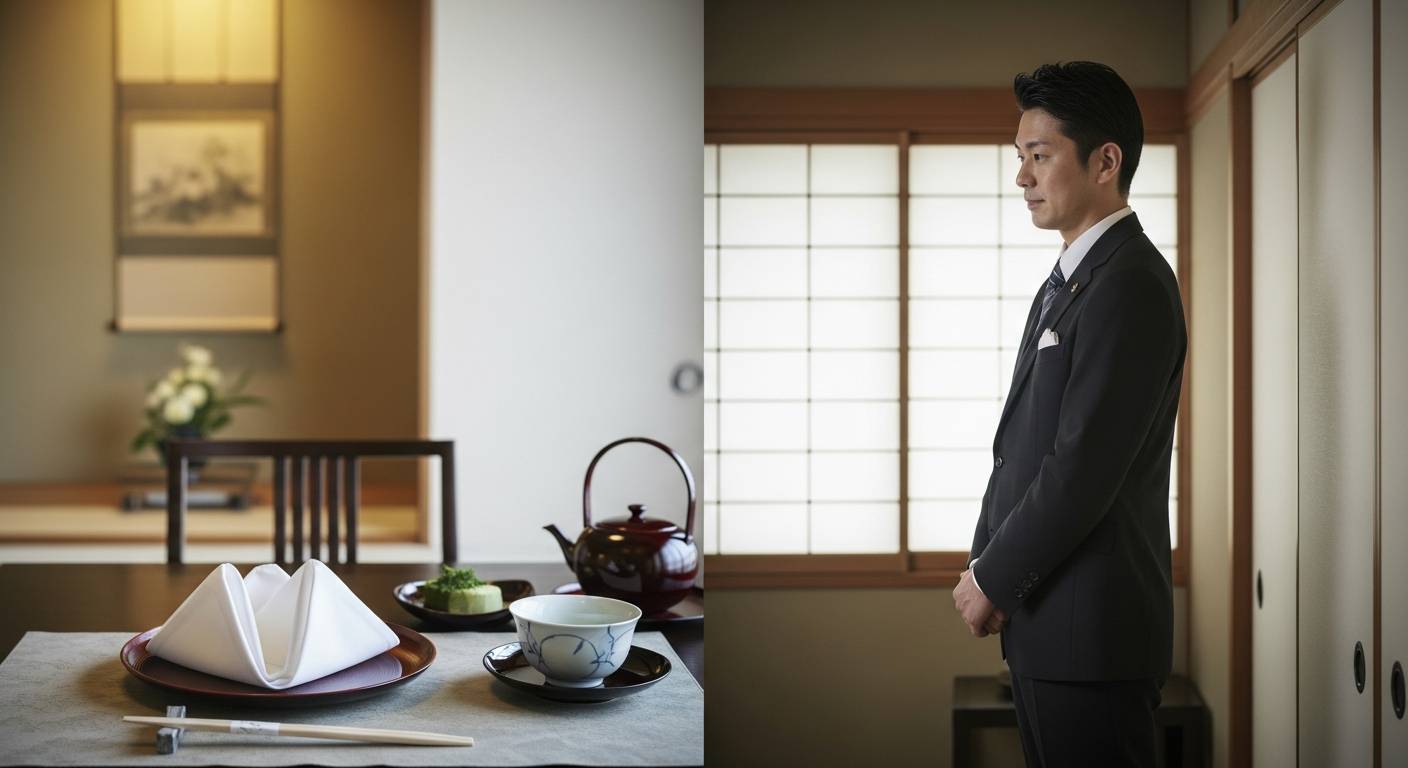
In the realm of luxury hospitality, there exists an art form so refined it often goes unnoticed by the untrained eye – the exceptional anticipatory service practiced by Japanese butlers. This distinctive approach to high-end service transcends mere efficiency; it embodies a cultural philosophy deeply rooted in Japan’s traditions of mindfulness and respect. As affluent travelers and expatriates increasingly seek authentic luxury experiences in Japan, understanding what truly differentiates Japanese butler services becomes essential knowledge for discerning clients.
The ability to anticipate needs before they’re verbalized isn’t simply a skill taught in Japanese butler academies – it’s a manifestation of “omotenashi,” the heartfelt desire to provide thoughtful hospitality without expectation of reward. This blog explores the meticulous training, cultural foundations, and practical applications that have positioned Japanese butler services as the gold standard for high-net-worth individuals worldwide.
Whether you’re planning a luxury stay in Tokyo, considering relocating to Japan, or simply fascinated by the psychology of exceptional service, join us as we unveil the invisible techniques that allow Japanese butlers to create seemingly magical experiences through the power of anticipation.
1. The Luxury of Being Understood: How Japanese Butlers Master the Art of Silent Anticipation
Japanese butler service transcends the conventional understanding of hospitality through a philosophy deeply rooted in the concept of “silent anticipation.” This refined approach elevates service beyond mere task performance into an art form that anticipates needs before they’re expressed. Unlike Western butler traditions that emphasize formal protocol, Japanese butlers cultivate an almost supernatural ability to read subtle cues—a slight adjustment in posture, a momentary glance, or even changes in breathing patterns.
At prestigious establishments like The Ritz-Carlton Tokyo or Palace Hotel Tokyo, butlers don’t wait for verbal requests. They operate on the principle of “kikubari” (気配り)—the practice of paying meticulous attention to others’ needs. A guest reaching for a napkin might find one already being offered; a preference mentioned casually during check-in mysteriously manifests throughout the stay without further discussion.
This intuitive service emerges from intensive training in mindfulness and observation. Japanese butler academies teach professionals to maintain what’s called “awareness zones”—concentric circles of attention that extend from immediate surroundings to the broader environment. This spatial awareness allows them to notice everything from an empty water glass to a guest who appears lost without making their vigilance feel intrusive.
The true luxury lies not in opulent surroundings but in the profound feeling of being completely understood without explanation. Many international visitors describe this experience as transformative—the first time they’ve felt genuinely “seen” in a service context. This emotional connection creates loyalty beyond what amenities alone can inspire.
Perhaps most remarkable is how Japanese butlers make this high-touch service appear effortless. Their movements are choreographed with such precision that they seem to disappear and reappear precisely when needed, maintaining what practitioners call “functional invisibility.” This creates an atmosphere where needs are met so seamlessly that guests can focus entirely on their experience rather than managing service interactions.
The perfection of anticipatory service requires years of dedication, yet the best practitioners insist that technical skills merely provide foundation. The true art lies in developing empathy so refined it becomes intuition—allowing butlers to understand what guests need before the guests themselves can articulate it.
2. Beyond Service: 5 Ways Japanese Butler Anticipation Creates Life-Changing Client Experiences
Japanese butler service elevates hospitality to an art form, distinguished primarily by the remarkable ability to anticipate needs before they’re expressed. This anticipatory service creates experiences that clients describe as nothing short of transformative. Here are five distinctive ways Japanese butlers master the art of anticipation to deliver exceptional service that sets global standards.
First, Japanese butlers practice “kuuki wo yomu” (reading the air) – the culturally ingrained ability to assess social dynamics and unspoken needs. This intuitive skill allows them to detect subtle shifts in mood, energy levels, or comfort, prompting them to adjust room temperature, offer refreshments, or provide privacy precisely when needed, often before clients realize these needs themselves.
Second, Japanese butler services emphasize meticulous observation and memory cultivation. Elite butlers maintain detailed preference profiles for regular clients, recording everything from preferred room temperatures to beverage choices at specific times of day. At establishments like the Hoshinoya Tokyo or The Peninsula Tokyo, returning guests often express amazement when butlers remember minute preferences mentioned during visits from years prior.
Third, anticipatory service manifests through thoughtful preparation of spaces. Japanese butlers apply principles of “omotenashi” (wholehearted hospitality) by ensuring environments are prepared with potential needs addressed – extra blankets during cooler evenings, umbrellas before unexpected rain showers, or having specific items available based on a client’s itinerary for the day.
Fourth, Japanese butler anticipation extends to timing interventions perfectly. The true mastery lies not just in knowing what a client might need but precisely when to provide it without disruption. This perfect timing creates an almost magical experience where wishes seem fulfilled the moment they form in the client’s mind.
Finally, Japanese butler anticipation includes crisis prevention through scenario planning. Elite butlers constantly evaluate what could potentially disturb their client’s experience and take preventive measures – from securing alternative transportation options before traffic problems arise to having medication on hand for known health conditions.
These anticipatory practices create experiences where clients feel truly seen and understood at a profound level. The psychological impact goes beyond mere convenience – clients describe feeling a rare sense of security and being valued in ways they seldom experience elsewhere. This anticipatory excellence explains why Japanese butler service has become the gold standard for luxury hospitality worldwide.
3. “Before You Ask”: Inside the Rigorous Training That Makes Japanese Butlers the World’s Most Intuitive
Japanese butlers operate at a level of service that often appears supernatural to first-time observers. Their ability to anticipate needs before they’re expressed isn’t magic—it’s the result of methodical, intensive training that transforms ordinary service professionals into masters of anticipation.
At prestigious institutions like the International Butler Academy’s Tokyo branch, trainees undergo a minimum six-month program that begins with breaking down and rebuilding their understanding of human behavior. “We don’t teach serving; we teach seeing,” explains one veteran instructor at a high-end Tokyo hotel. This foundational philosophy separates Japanese butler training from other service traditions.
The concept of “sensen no sen”—anticipation before any indication—forms the core of this training. Butlers learn to observe micro-expressions, body language shifts, and environmental cues that signal a guest’s emerging needs. They practice thousands of scenarios, from detecting when a guest is feeling slightly cold before they reach for a jacket, to noticing the subtle signs that indicate someone needs assistance with technology without wanting to ask.
Physical training is equally demanding. Japanese butlers develop peripheral awareness that allows them to monitor an entire room while appearing focused only on their immediate task. They master the art of “invisible movement”—the ability to approach, serve, and withdraw without creating disruption in the guest’s experience.
What truly distinguishes Japanese butler training is its emphasis on psychological preparation. Trainees undergo exercises in empathetic projection—mentally placing themselves in their guests’ situations to anticipate comfort needs. At the renowned Hoshinoya Tokyo, butlers routinely experience the entire guest journey themselves, sleeping in rooms, using amenities, and identifying potential friction points that might require anticipatory service.
Documentation and communication systems further enhance this anticipatory service. The most elite properties maintain detailed guest preference systems that track everything from ideal room temperatures to beverage timing preferences. However, unlike other luxury operations, Japanese butler services specifically train staff not to mechanically follow these notes but to use them as context for deeper observation.
The results of this training manifest in service moments that often astonish international guests. The umbrella that appears the moment the first raindrops fall, the preferred tea that arrives just as a guest realizes they’re thirsty, or the subtle adjustment to a room’s lighting based solely on a guest’s brief glance toward a too-bright lamp—these moments represent the culmination of years of disciplined observation training.
Perhaps most tellingly, Japanese butler training includes the art of invisible correction—the ability to rectify misjudgments without drawing attention to them. This creates an environment where anticipatory service appears flawless, even though it represents a continuous process of observation, hypothesis, and refined action.
For those seeking to understand the exceptional nature of Japanese hospitality, it is this commitment to anticipation—not just reaction—that creates service experiences that feel less like being attended to and more like being understood at a fundamental human level.