
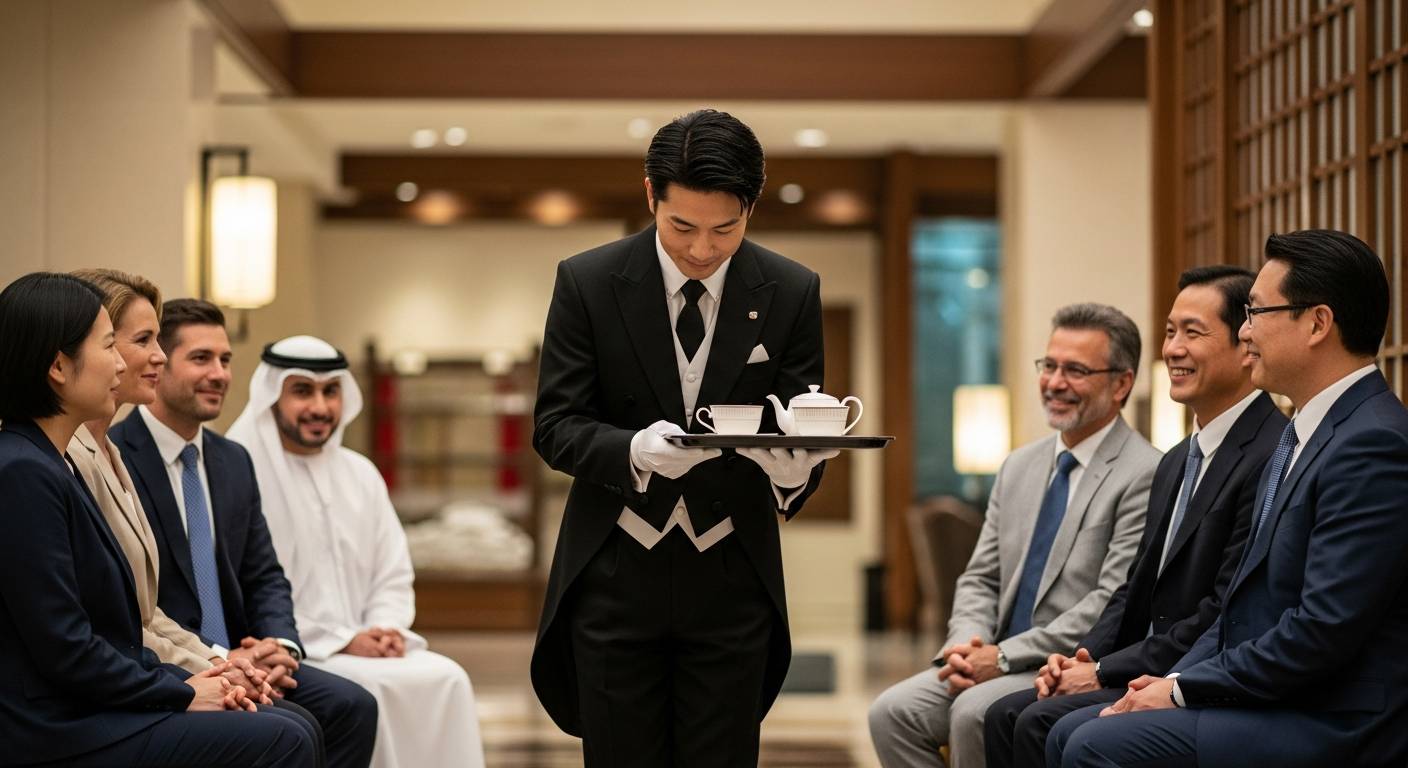
In the rarefied world of ultra-luxury hospitality, a remarkable phenomenon has been quietly developing: Japanese butlers are increasingly becoming the preferred choice for High Net Worth Individuals (HNWIs) from around the globe. This trend is no coincidence, but rather the result of a unique confluence of cultural attributes, rigorous training, and an innate understanding of what true luxury service entails. As international travelers and expatriates seek authentic yet sophisticated experiences in Japan, the demand for professionally trained Japanese butlers who can navigate complex cross-cultural expectations continues to rise exponentially.
This comprehensive analysis explores the distinctive qualities that make Japanese butler services exceptional in the global luxury landscape. From the cultural foundations of Omotenashi (Japanese hospitality) to the sophisticated emotional intelligence that allows these professionals to anticipate needs before they’re expressed, we examine why discerning international clients increasingly request Japanese butlers when seeking the pinnacle of personalized service. Whether you’re a luxury traveler planning your next journey to Japan, an expatriate seeking lifestyle support, or simply fascinated by the psychology behind exceptional service, this exploration of Japanese butler excellence offers valuable insights into a world where cultural intelligence creates extraordinary experiences.
1. Unveiling the Secret: How Japanese Butlers Master Cross-Cultural Etiquette for Elite Global Clients
Japanese butlers have earned an exceptional reputation among High Net Worth Individuals (HNWIs) worldwide, not merely for their meticulous service but for their remarkable cultural intelligence. This distinct advantage allows them to navigate the complex waters of international hospitality with unparalleled finesse. At the heart of their success lies an intuitive understanding of cross-cultural etiquette—a skill cultivated through rigorous training and deeply embedded Japanese cultural values.
The foundation of Japanese butler excellence begins with “kuuki wo yomu” (reading the air)—the ability to perceive unspoken needs and anticipate desires without verbal communication. This innate sensitivity transcends language barriers, allowing Japanese butlers to serve clients from diverse backgrounds with minimal explicit instruction. For instance, Japanese butlers intuitively understand when Middle Eastern clients might require prayer times and spaces, when European clients expect wine expertise, or when American clients value friendly yet professional interaction.
Beyond intuition, Japanese butlers undergo intensive cross-cultural training at prestigious academies like the International Butler Academy Japan and Tokyo Butler School. These institutions emphasize not just service protocols but deep cultural anthropology—teaching butlers to recognize and respect everything from dietary restrictions to religious observances, cultural taboos, and regional customs from around the world. A Japanese butler serving a Saudi prince understands the nuances of halal dining, while the same butler can seamlessly transition to serving Orthodox Jewish clients with kosher requirements.
The harmonization of “omotenashi” (Japanese hospitality philosophy) with international service standards creates a uniquely adaptable approach. Unlike Western butler traditions that sometimes adhere rigidly to established protocols, Japanese butlers blend their cultural heritage of extreme attentiveness with flexible adaptation to client preferences. This hybrid methodology allows them to provide personalized service that respects both Japanese precision and the cultural expectations of international elites.
Major luxury hotels like The Peninsula Tokyo and Aman Tokyo have pioneered specialized cultural intelligence training for their butler staff, creating service professionals who can recognize subtle cultural cues that might elude their Western counterparts. These butlers master not just multiple languages but the unspoken languages of gesture, proxemics, and cultural context that vary dramatically between, for example, Russian oligarchs and Brazilian industrialists.
This cultural fluency extends to understanding status symbols and preferences across different nationalities. Japanese butlers recognize that Chinese billionaires may have different expectations regarding visible luxury than their European counterparts. They know when discretion is paramount for certain nationalities and when others prefer more visible demonstrations of their status through service interactions.
The success of Japanese butlers with international HNWIs ultimately stems from their philosophical approach to service—one that transcends mere transactions to create meaningful connections across cultural divides. By mastering the delicate balance between Japanese precision and international adaptability, these exceptional professionals have created a service standard that speaks the universal language of uncompromising excellence.
2. Beyond Service: The Emotional Intelligence That Makes Japanese Butlers Preferred by International High Net Worth Individuals
Japanese butlers have emerged as preferred service professionals among international High Net Worth Individuals (HNWIs), not merely for their technical proficiency but for their remarkable emotional intelligence. This distinct advantage stems from cultural elements deeply embedded in Japanese society.
At the core of this preference lies the Japanese concept of “sasshi” – the ability to anticipate needs before they’re expressed. While Western service often responds to explicit requests, Japanese butlers excel at reading subtle cues and addressing desires before they’re verbalized. This anticipatory service creates an environment where HNWIs feel understood without explanation – a rare comfort for individuals accustomed to articulating their every need.
The Japanese cultural principle of “kuuki wo yomu” (reading the air) translates perfectly to high-end service environments. Japanese butlers can assess the emotional temperature of a room, adjusting their presence and service style accordingly. When an HNWI desires privacy, the Japanese butler intuitively becomes invisible; when engagement is welcomed, they provide thoughtful conversation. This emotional flexibility creates service that feels personalized rather than procedural.
Furthermore, Japanese butlers approach their role with “omotenashi” – selfless hospitality without expectation of reward. Unlike service models where emotional labor might feel transactional, Japanese butlers provide genuine care. Their service doesn’t merely satisfy material needs but nurtures emotional well-being, creating bonds of trust particularly valued by international clients who often feel isolated by their wealth.
For Japanese butlers, emotional intelligence extends to cultural adaptability. They seamlessly blend Japanese service traditions with international expectations, creating comfort for clients from diverse backgrounds. This cultural fluency allows them to navigate complex social situations, making them invaluable for HNWIs with global lifestyles and multicultural households.
The Imperial Hotel Tokyo and Rosewood Tokyo have recognized this advantage, investing significantly in emotional intelligence training for their butler staff. Their programs emphasize cross-cultural sensitivity alongside traditional service skills, creating professionals who understand the unspoken needs of international clientele.
3. Cultural Adaptability: Why Japanese Butlers Are Increasingly Sought After by the World’s Wealthiest Travelers
Japanese butlers have emerged as the gold standard in luxury service, particularly among High Net Worth Individuals (HNWIs) from diverse cultural backgrounds. This phenomenon is no coincidence but rather the result of a unique blend of traditional Japanese hospitality principles and exceptional cultural adaptability.
At the core of Japanese butlers’ appeal is their mastery of “kuuki wo yomu” – the ability to read the atmosphere and anticipate needs before they’re verbalized. This intuitive approach transcends language barriers, making Japanese butlers particularly effective with international clientele who may express their preferences through subtle cues rather than direct requests.
The Ritz-Carlton Tokyo and Aman Tokyo have reported significant increases in requests specifically for Japanese butlers from Middle Eastern royalty, American tech moguls, and European aristocracy. These elite travelers cite the Japanese butlers’ remarkable ability to seamlessly adapt their service style to accommodate different cultural expectations around privacy, formality, and personal space.
Unlike their Western counterparts who often follow more standardized protocols, Japanese butlers excel at cultural code-switching. They can shift from the formal distance preferred by traditional Japanese clients to the warmer, more personalized interaction often expected by American HNWIs, all while maintaining impeccable professionalism.
This adaptability extends to practical matters as well. Japanese butlers typically undergo rigorous training in international etiquette, dietary restrictions across cultures, and global luxury standards. The International Butler Academy in Osaka has developed specialized modules focusing on cross-cultural service excellence, teaching butlers how to navigate complex cultural nuances from proper eye contact customs to appropriate gift-giving protocols.
The commitment to omotenashi – wholehearted hospitality – combined with meticulous attention to detail creates an environment where international guests feel both understood and respected in their cultural identity. This cultural intelligence manifests in thoughtful gestures such as preparing a traditional breakfast from a guest’s home country with Japanese precision, or understanding when silence is preferable to conversation based on cultural context.
For global travelers accustomed to explaining their preferences at each new destination, the intuitive adaptability of Japanese butlers represents the ultimate luxury – being understood without having to explain oneself. This rare quality has made Japanese-trained butlers among the most sought-after service professionals in ultra-luxury settings worldwide, from private yachts to exclusive estates.