
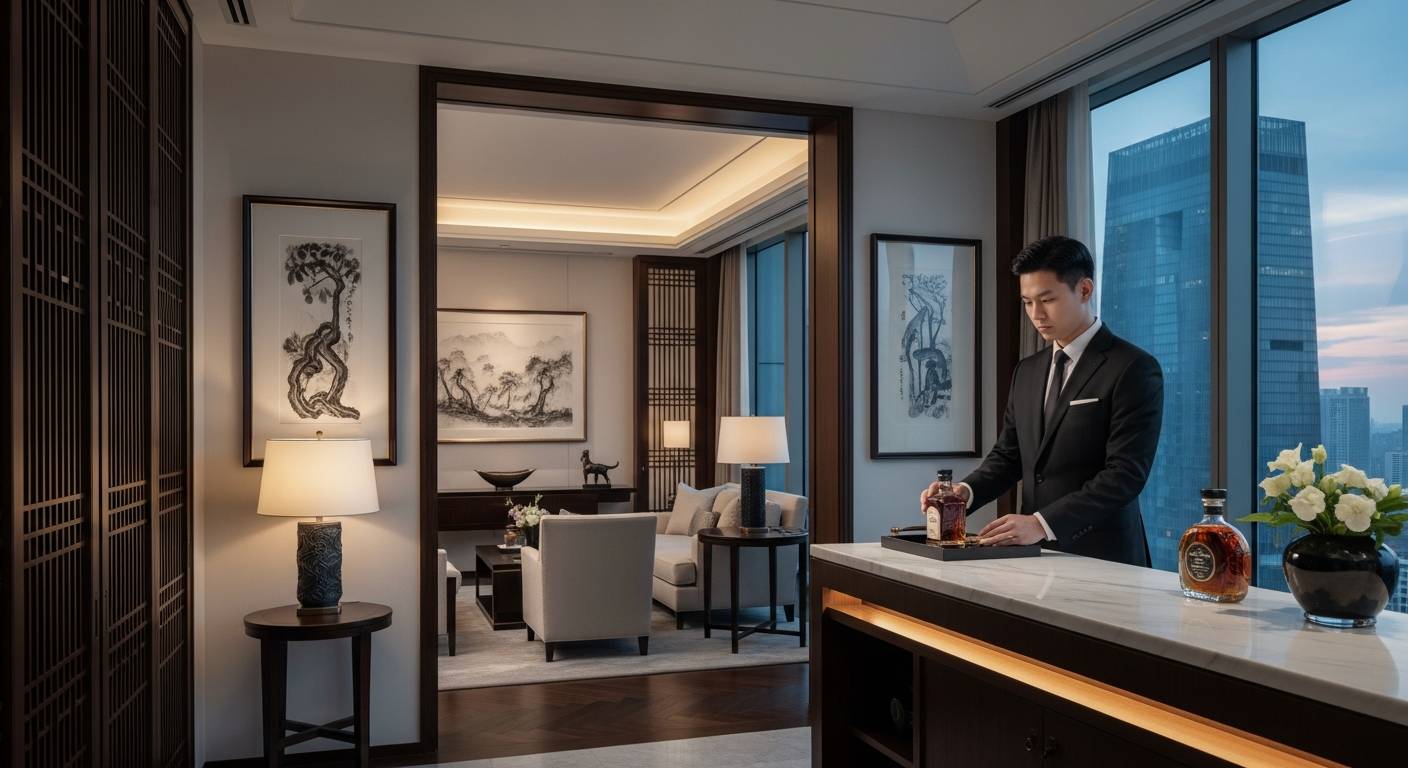
In recent years, the concept of personal butler service has undergone a remarkable transformation across Asian luxury markets. As high-net-worth individuals (HNWIs) increasingly seek personalized experiences that blend traditional values with modern convenience, the demand for elite butler services has seen unprecedented growth. This evolution represents more than a passing trend—it signifies a fundamental shift in how luxury is defined and experienced in the 21st century.
The intersection of Japanese Omotenashi principles with contemporary butler service has created a unique approach to luxury lifestyle management that resonates deeply with discerning clients. Far from the outdated stereotype of the stiff British house servant, today’s professional butlers in Japan and across Asia represent the pinnacle of discretion, efficiency, and cultural sophistication.
In this comprehensive exploration, we’ll examine how premium butler services are revolutionizing luxury living standards, particularly for international residents and visitors navigating Japan’s distinctive cultural landscape. From managing multi-property portfolios to orchestrating bespoke experiences that honor individual preferences, the modern butler profession has evolved to meet the complex needs of Asia’s most successful individuals.
Join us as we delve into this fascinating world where exceptional service meets cultural artistry, creating an unparalleled lifestyle experience for those who demand nothing but excellence.
1. The Art of Japanese Omotenashi: How Elite Butlers are Transforming HNWI Lifestyles in Asia
The concept of “omotenashi” – Japan’s unique approach to hospitality that emphasizes selfless service and anticipating needs – is revolutionizing the butler profession across Asia’s luxury market. As High-Net-Worth Individuals (HNWIs) in Asia continue amassing wealth at unprecedented rates, their expectations for personalized service have evolved beyond traditional Western standards of butlering.
Elite butlers trained in Japanese omotenashi principles bring a distinct competitive edge to luxury residences, hotels, and private estates throughout Singapore, Hong Kong, Shanghai, and Tokyo. Unlike conventional butler service that follows rigid protocols, omotenashi-influenced butlering creates deeply personalized experiences through intuitive understanding of employers’ unstated preferences.
The Four Seasons Tokyo at Otemachi exemplifies this trend with their bespoke butler program, where staff undergo intensive training in both technical skills and the philosophical underpinnings of omotenashi. Similarly, The Ritz-Carlton Singapore has integrated these principles into their legendary service approach, resulting in remarkable guest loyalty metrics.
For private household butlers, mastery of omotenashi translates to anticipatory service that borders on the telepathic. One prominent butler to a Taiwanese technology magnate explains: “True omotenashi means I’ve already prepared the perfect cup of gyokuro tea before my employer realizes he’s thirsty. It’s about creating moments of perfection that appear effortless.”
This harmonious blend of Eastern philosophical principles with Western technical expertise has created an entirely new butler archetype. Training academies like The International Butler Academy have responded by developing specialized programs focusing on Asian hospitality traditions, with tuition often sponsored by luxury brands seeking competitive differentiation.
As wealth continues concentrating in Asian markets, these omotenashi-trained butlers command premium salaries starting at $120,000 annually, with the most sought-after professionals earning upwards of $250,000 plus accommodations and benefits. For Asia’s ultra-wealthy, these butlers represent not merely staff but essential lifestyle curators who embody the perfect synthesis of tradition and innovation in luxury service.
2. Beyond Service: 5 Ways Asian Butler Professionals are Setting New Standards in Global Luxury
Asian butler professionals have quietly revolutionized the luxury service industry, establishing benchmarks that are transforming global expectations. While traditional European butler service once dominated elite households, Asian professionals have introduced innovations that blend meticulous attention to detail with cultural intelligence and technological integration.
First, Asian butlers excel in cultural adaptability—mastering the nuanced protocols of multinational clientele. A butler serving in Singapore might seamlessly transition from preparing a traditional Chinese tea ceremony for one client to organizing a Western business dinner for another, all while understanding the subtle cultural expectations that accompany each scenario.
Second, Asian butler academies have pioneered comprehensive technology training. The modern Asian butler manages smart home ecosystems, cybersecurity protocols, and digital privacy measures—essential skills when serving tech billionaires from Seoul to Shanghai who expect their homes to function as efficiently as their businesses.
Third, Asian butler services have elevated wellness integration to an art form. Beyond traditional service, these professionals coordinate with Eastern and Western medical practitioners, nutritionists, and wellness experts to create holistic lifestyle management for principals whose health priorities are as important as their business commitments.
Fourth, Asian-trained butlers have redefined discretion in the digital age. With principals often including high-profile entrepreneurs and celebrities, Asian butler training now incorporates advanced privacy protocols, social media management, and crisis communication—creating an invisible shield around their employers’ private lives.
Finally, Asian butler professionals have introduced sustainable luxury service, responding to the growing environmental consciousness among wealthy clients. From sourcing carbon-neutral products to implementing zero-waste household management systems, these butlers are proving that impeccable service and environmental responsibility can coexist.
These innovations represent more than incremental improvements—they constitute a fundamental reimagining of what butler service means in contemporary luxury contexts. As wealth continues shifting eastward, these Asian-influenced standards are increasingly becoming the global benchmark for excellence in household management and personal service.
3. Inside the $500 Billion Asian Luxury Market: Why HNWIs are Investing in Personal Butler Services
The Asian luxury market continues its unprecedented expansion, now estimated at over $500 billion and growing at a pace that outstrips global averages. Within this thriving ecosystem, a fascinating trend has emerged: High-Net-Worth Individuals (HNWIs) across Singapore, Hong Kong, Shanghai, and Tokyo are increasingly investing in premium butler services as the ultimate status symbol and lifestyle enhancement.
This shift represents more than mere conspicuous consumption. For Asia’s elite, personal butlers have become essential lifestyle architects who deliver something increasingly precious—time and personalized attention. Market analysis reveals that HNWIs allocate between $150,000 to $350,000 annually for premium household staffing, with dedicated butlers commanding the highest investment.
“The modern Asian HNWI views butler service as an investment rather than an expense,” explains a director at Singapore’s Eden Private Staff, where client waitlists have extended to six months. “What they’re purchasing is frictionless living—the ability to navigate complex social, business, and personal demands with perfect efficiency.”
The British Butler Institute reports a 78% increase in Asian enrollments over the past four years, with most graduates immediately securing positions with families in major financial hubs. These modern butlers aren’t merely serving tea—they’re managing multiple residences, coordinating private aviation logistics, overseeing art collections worth millions, and orchestrating complex social calendars.
In Hong Kong’s Victoria Peak and Singapore’s Nassim Road, property listings now prominently feature butler quarters and service areas, with developers recognizing this as a key selling point for properties in the $20 million+ range. Leading luxury condominium developments like The Wallich Residence in Singapore have incorporated butler service as a standard amenity, reflecting this market evolution.
The technology integration within this sphere is equally noteworthy. Custom applications connecting principals with their butler staff have emerged, with companies like Tokyo-based Luxe Service Platform raising significant venture capital to develop specialized software for household management. These platforms facilitate everything from wardrobe inventory management to preference tracking across multiple residences.
For those considering entering this market, the commitment extends beyond financial investment. The relationship between principal and butler represents a unique professional partnership built on extraordinary trust and discretion. As one prominent Malaysian tech entrepreneur notes, “My butler knows more about my life than my closest associates. This level of service requires finding someone who becomes an extension of your thinking.”
The butler renaissance in Asian luxury markets signals something profound about wealth in the modern era. Beyond material acquisition, today’s HNWIs are investing in systems that enhance life quality through personalization, efficiency, and the ultimate luxury—having one’s needs anticipated before they’re expressed.