
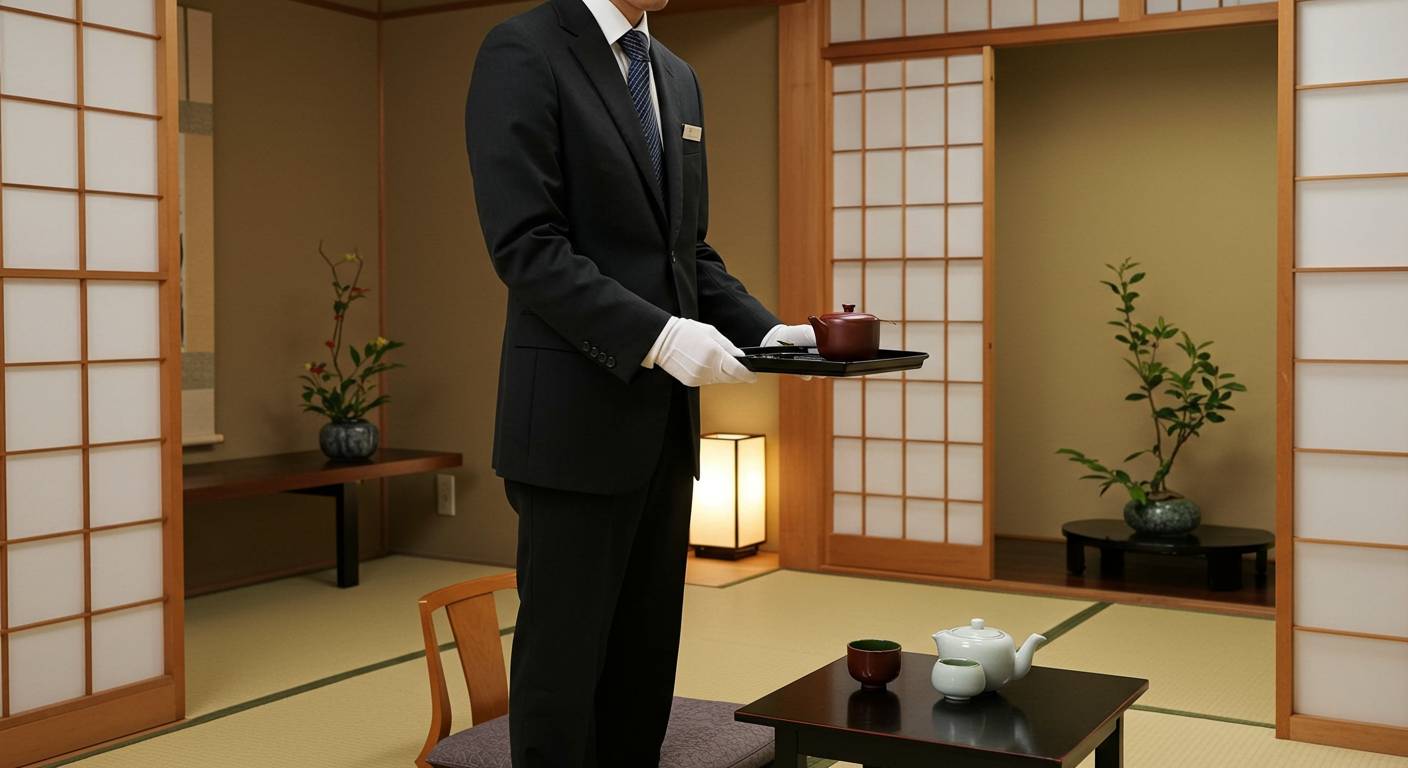
Are you curious about what separates Japanese butler service from the rest of the world? For discerning global travelers and expatriates seeking the pinnacle of personal service, understanding the unique essence of Japanese hospitality can transform your luxury experience. In today’s exploration of “Omotenashi Excellence,” we’ll unveil the closely guarded training methodologies that have established Japan’s reputation for producing the world’s most attentive personal butlers.
Unlike conventional Western service approaches, Japanese butler training incorporates centuries of cultural refinement, blending traditional values with modern luxury standards. This distinctive combination has created a class of service professionals who anticipate needs before they arise—a skill particularly valuable for international executives and high-net-worth individuals navigating life in Japan.
As we delve into the ancient traditions, exclusive training techniques, and the philosophy of anticipatory hospitality that defines Japan’s elite butler profession, you’ll discover why those seeking authentic luxury experiences increasingly turn to professionally trained Japanese butlers and concierge specialists. Whether you’re planning an extended stay in Tokyo or seeking to understand the principles that could enhance your own service standards, this comprehensive guide reveals the secrets behind Japan’s most respected hospitality tradition.
1. The Ancient Traditions Behind Modern Japanese Butler Training: How Centuries of Omotenashi Shape Today’s Elite Service
The concept of “omotenashi” extends far beyond simple hospitality in Japan—it represents a philosophy of selfless service that has evolved over centuries and now forms the foundation of elite personal butler training throughout the country. While European butler traditions often emphasize formality and distance, Japanese butler training incorporates elements of Zen mindfulness, samurai discipline, and tea ceremony precision to create a uniquely attentive service approach.
At the prestigious International Butler Academy Japan in Tokyo, trainees begin their journey by studying historical texts on servant leadership dating back to the Heian period. These ancient manuscripts emphasize anticipating needs before they arise—a skill that remains the hallmark of exceptional Japanese butlers today. Modern training programs incorporate this historical knowledge with contemporary service techniques, creating professionals who understand that true hospitality transcends mere technical proficiency.
The influence of tea ceremony (chado) provides another distinctive element in Japanese butler training. The meticulous attention to guest comfort, precise movements, and awareness of seasonal elements are directly incorporated into butler protocols. Master instructor Takashi Yamamoto at the Tokyo Butler Institute explains: “The tea master’s ability to create harmony between host, guest, and environment is precisely what distinguishes exceptional butler service from merely adequate service.”
Unlike Western approaches that often compartmentalize duties, Japanese butler training emphasizes holistic service consciousness. This includes mastering the art of “kuuki wo yomu” (reading the atmosphere)—the ability to sense subtle shifts in a client’s mood or needs without explicit communication. This intuitive skill, developed through rigorous observation exercises and practical training, allows Japanese butlers to provide seamless service that feels almost supernatural in its timing and appropriateness.
Today’s elite Japanese butler programs maintain these cultural foundations while incorporating international standards. At the Yokohama School of Hospitality Arts, students practice traditional omotenashi principles alongside training in wine service, wardrobe management, and modern household technology. This fusion creates versatile professionals equally comfortable serving in Tokyo penthouses, traditional ryokans, or global settings.
The demanding physical discipline required of Japanese butlers also reflects historical influences. Training regimens often include early morning meditation, posture practice, and endurance exercises designed to enable butlers to remain perfectly composed during long service hours. This physical conditioning, reminiscent of samurai training traditions, ensures that Japanese butlers maintain impeccable bearing even during the most challenging service scenarios.
What ultimately distinguishes Japanese butler excellence is not just technical skill but the philosophical depth behind every action. The true masters of Japanese personal service understand that omotenashi represents the art of selfless giving—creating moments of perfect comfort and harmony for others without drawing attention to oneself. This spiritual dimension transforms service from mere employment into a respected vocation and art form worthy of lifelong dedication.
2. From Samurai Code to White Gloves: 5 Exclusive Training Methods Only Japanese Butler Schools Teach
The art of Japanese butlering transcends ordinary service, drawing from centuries of cultural refinement and the principle of omotenashi—anticipatory hospitality that feels both invisible and omnipresent. Elite Japanese butler academies like the International Butler Academy Japan and Tokyo Butler School have developed distinctive training methodologies that separate their graduates from their Western counterparts. These institutions don’t merely teach service; they cultivate a mindful presence rooted in Japanese philosophical traditions.
1. Kata Training – The Ritualized Movements**
Japanese butlers learn kata—prescribed movement patterns similar to those in martial arts. Every action, from pouring tea to presenting documents, follows meticulously choreographed motions designed for maximum efficiency and minimal disturbance. Students practice these movements thousands of times until they become muscle memory, allowing them to perform complex service sequences with unconscious grace. This training method teaches that true luxury service isn’t just about what you do but precisely how you do it.
2. Ma Consciousness – The Power of Silence and Space**
Unlike Western service traditions that often emphasize verbal engagement, Japanese butler training places extraordinary emphasis on ma—the conscious use of negative space and silence. Butler candidates learn to recognize when clients need space rather than attention, to move through rooms without creating disturbance, and to develop an acute sensitivity to the rhythm of the household. This training involves meditation practices and awareness exercises where students must maintain perfect stillness while remaining completely alert.
3. Kokoro Development – The Inner Mind Training**
Exclusive to Japanese traditions is the concept of kokoro training—cultivating the “heart/mind” connection that enables true anticipatory service. Students undergo intensive psychological training to detect subtle emotional cues and unstated needs. At Tokyo’s premier butler academies, trainees participate in blindfolded service exercises where they must sense their client’s needs without visual cues, developing what can only be described as a sixth sense for service.
4. Bushido-Influenced Service Philosophy**
Drawing from samurai ethics, Japanese butler training incorporates elements of bushido code—loyalty, honor, and absolute dedication. Trainees study historical texts on samurai service to noble households and integrate these principles into modern service contexts. This translates to unwavering loyalty, complete discretion, and a service attitude that transcends employment to become a life path. The Ibaraki Butler Academy famously requires students to craft personal service creeds that articulate their service philosophy.
5. Micro-Detailed Refinement**
Perhaps most distinctive is the extraordinary attention to micro-details that would be considered excessive even in elite European training. Japanese butler candidates learn to fold napkins with surgical precision measured to the millimeter, to pour liquids that stop exactly at predefined levels without measuring tools, and to synchronize their breathing with clients during service interactions for maximum comfort. At Osaka’s renowned butler academy, final examinations include arranging flowers so their scent reaches the client at precisely the right intensity depending on the time of day.
These uniquely Japanese approaches to butler training produce service professionals who operate with a distinctive blend of precision, intuition, and philosophical depth. While European traditions emphasize rules and protocols, Japanese butler training cultivates a state of being—where service becomes not just a profession but an expression of self-mastery and deep cultural values.
3. Beyond Service: How Japanese Butlers Master the Art of ‘Anticipatory Hospitality’ That Western Schools Can’t Replicate
The concept of anticipatory hospitality—”kikubari” in Japanese—represents the pinnacle of butler service that distinguishes Japan’s elite professionals. Unlike Western counterparts who excel at responding to requests, Japanese butlers operate in a different dimension altogether: they address needs before clients themselves recognize them.
At the prestigious Tokyo Butler Academy, students undergo intensive training in “presence awareness”—a state of heightened environmental sensitivity. This practice involves cataloging subtle environmental cues while maintaining perfect composure. When a foreign dignitary unconsciously touches his neck during dinner, a properly trained Japanese butler might silently adjust the room temperature by two degrees—a service performed so seamlessly the guest never realizes their discomfort was detected and resolved.
The training methodology employs unique techniques not found in European schools. Students practice “empathy meditation” for 20 minutes daily, mentally inhabiting their client’s experience. They master “invisible service” by performing tasks with such fluidity that guests perceive the results without witnessing the effort. In one notable exercise, apprentices must arrange flowers in a room while a blindfolded instructor determines if their presence disturbed the atmosphere.
This capacity for anticipation extends beyond physical needs. Elite Japanese butlers study client preferences extensively, creating detailed dossiers that go far beyond dietary restrictions or favorite wines. A top-tier professional might note that their employer reads most attentively in morning light, subsequently ensuring important documents are presented at breakfast rather than evening hours.
The philosophical foundation for this approach lies in Japan’s collective cultural understanding that true luxury isn’t found in grand gestures but in the absence of friction. Western butler training traditionally emphasizes proper responses to requests; Japanese methodology teaches that the highest service eliminates the need for requests entirely. This distinction explains why high-net-worth individuals increasingly seek Japanese-trained household staff despite premium compensation requirements.
For those aspiring to butler excellence, Japanese anticipatory service represents the discipline’s cutting edge—where service becomes an invisible art form that shapes experience without ever announcing its presence.
