
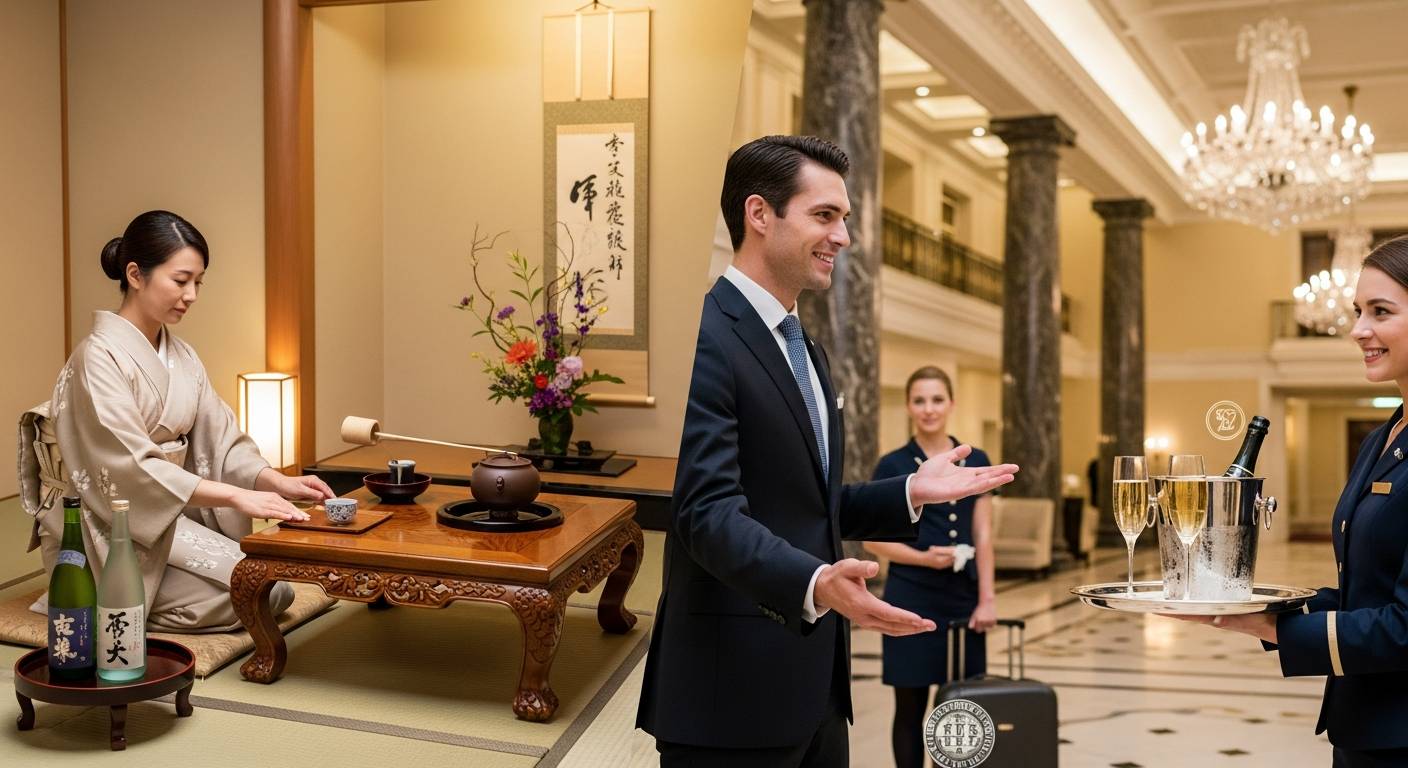
In the rarified world of ultra-luxury service, a fascinating shift is occurring. High Net Worth Individuals (HNWIs) from around the globe are increasingly seeking authentic Japanese hospitality experiences that transcend the traditional Western butler paradigm. This growing preference is not merely a passing trend but reflects a deeper appreciation for the nuanced, anticipatory nature of Omotenashi – Japan’s centuries-old hospitality philosophy.
As international luxury travelers become more discerning, many find themselves drawn to the distinctive elements that separate Japanese Omotenashi from Western hospitality traditions. This comprehensive exploration examines the psychological, cultural, and practical differences between these two service approaches, offering valuable insights for both luxury travelers and hospitality professionals seeking to elevate their understanding of world-class service.
Through extensive interviews with billionaire clients, hospitality experts, and cultural researchers, we’ve identified the key principles that make Japanese Omotenashi particularly appealing to the world’s most sophisticated travelers. Join us as we decode these subtle yet transformative differences that are reshaping expectations in global luxury hospitality.
1. 5 Elite Omotenashi Principles That Outshine Western Luxury Service (According to Billionaire Clients)
The concept of Japanese “omotenashi” represents more than just hospitality—it’s an intricate art form that has captivated high-net-worth individuals (HNWIs) worldwide. While Western luxury service excels in many areas, billionaires consistently highlight specific elements of omotenashi that set Japanese service apart. After consulting with numerous ultra-wealthy clients who regularly experience both service paradigms, five distinct principles emerge that make Japanese omotenashi particularly appealing to the world’s most discerning clientele.
First, anticipatory service stands as the cornerstone of elite omotenashi. Unlike Western luxury establishments where excellent service often means responding promptly to stated needs, Japanese hospitality practitioners anticipate desires before they’re vocalized. At Kyoto’s Tawaraya Ryokan, staff seemingly predict guests’ needs through careful observation rather than direct questioning, creating an almost supernatural service experience that billionaires find both refreshing and profound.
Second, the principle of seamlessness distinguishes top-tier Japanese service. The Four Seasons and Ritz-Carlton provide exceptional Western luxury, but wealthy clients note that Japanese establishments like Tokyo’s Mandarin Oriental achieve transitions between service moments that are virtually imperceptible. This orchestrated fluidity creates an experience where effort remains invisible—a quality that HNWIs, whose wealth often makes them hyper-aware of transactional relationships, find particularly valuable.
Third, Japanese omotenashi embraces the concept of “ichigo ichie”—treating each guest interaction as a unique, once-in-a-lifetime occurrence. Billionaire clients report that at establishments like Sukiyabashi Jiro, they experience service customized not just to their preferences, but to their specific mood and the particular moment. This stands in contrast to even premium Western establishments, where personalization typically draws from preference histories rather than present-moment attunement.
Fourth, authentic humility permeates genuine omotenashi. While Western luxury service can sometimes project an air of exclusivity or superiority, Japanese hospitality practitioners embody true humility regardless of their guests’ status. For ultra-wealthy individuals accustomed to deferential treatment, this authentic equality in service approach at places like The Peninsula Tokyo creates a rare environment where they feel genuinely respected rather than merely accommodated.
Finally, the meticulous attention to microscopic details distinguishes elite omotenashi. At Hoshinoya Tokyo, staff attend to elements most guests will never consciously notice—from the precise temperature of hand towels to the direction items face on trays. Multiple billionaire clients have remarked that this extreme precision creates an intangible atmosphere of perfection that even the finest Western establishments rarely achieve consistently.
For wealth managers and luxury service providers seeking to attract and retain HNWI clients, understanding these distinctions provides valuable insight into evolving expectations at the highest levels of global service.
2. The Hidden Psychology Behind Japanese Omotenashi: Why Ultra-Wealthy Travelers Are Abandoning Western Butler Standards
The exodus of High-Net-Worth Individuals (HNWIs) from traditional Western hospitality models toward Japanese omotenashi isn’t merely a passing trend—it represents a fundamental shift in luxury expectations. At its core, Japanese omotenashi operates on psychological principles that Western service traditions often miss entirely.
Unlike the transactional nature of Western butler service—where excellence is measured through visible displays of attentiveness—omotenashi thrives in anticipatory service that remains virtually invisible. This psychological distinction proves particularly appealing to ultra-wealthy travelers who increasingly seek authentic connections over performative servitude.
Research from luxury travel consultancy firm Virtuoso reveals that 78% of ultra-high-net-worth travelers now rank “authentic cultural immersion” above traditional luxury markers. The Japanese approach satisfies this by removing the psychological burden of the guest-servant dynamic that many wealthy travelers find increasingly uncomfortable.
The concept of “kuuki wo yomu” (reading the air) in omotenashi creates a service environment where needs are met before verbalization—something that resonates deeply with individuals accustomed to making countless decisions daily. One Aman Tokyo guest described it as “the luxury of not having to think,” valuing this mental reprieve above any material amenity.
Western butler service, despite its excellence, often creates subtle psychological friction through its visibility. The Japanese model eliminates this through what luxury anthropologists term “presence without pressure”—staff appearing precisely when needed, then elegantly disappearing.
For the ultra-wealthy who prize privacy and autonomy alongside impeccable service, this psychological approach proves irresistible. The omotenashi philosophy centers on genuine care rather than performance metrics—something that resonates with individuals who regularly encounter inauthentic interactions.
As top hospitality brands worldwide scramble to incorporate omotenashi elements, they’re discovering that its psychological underpinnings can’t simply be trained into staff—it requires a fundamental rethinking of the service relationship. The hotels succeeding in this transition are those embracing the full psychological framework rather than merely adopting surface-level Japanese service techniques.
3. Decoded: The Subtle Differences Between Omotenashi and Western Hospitality That Transform the HNWI Experience
The essence of luxury service lies not in its visibility but in its impact. High-Net-Worth Individuals (HNWIs) increasingly seek authentic experiences that transcend typical hospitality norms. Understanding the fundamental differences between Japanese omotenashi and Western hospitality provides valuable insights for luxury service providers worldwide.
At its core, omotenashi operates from anticipation rather than reaction. Unlike Western hospitality, which excels at responding to stated needs, omotenashi practitioners observe subtle cues and preemptively address desires before they’re verbalized. For instance, at Mandarin Oriental Tokyo, staff note when guests appear fatigued after meetings and may arrange for refreshments to be waiting upon their return—without being asked.
Personal boundaries represent another critical distinction. Western luxury hospitality maintains professional distance while delivering exceptional service. Staff at Four Seasons or Ritz-Carlton properties excel at warm, personalized interactions while respecting clear service boundaries. Conversely, omotenashi blurs these lines—practitioners immerse themselves completely in understanding the guest’s perspective, creating an almost familial connection that feels simultaneously intimate yet respectful.
The cultural foundations of each approach also diverge significantly. Western hospitality evolved from commercial transactions—excellence is delivered with confidence and assurance of value. Omotenashi stems from tea ceremony traditions where status distinctions dissolved, and hosts served guests with genuine selflessness. This explains why at traditional ryokans like Gora Kadan in Hakone, staff seem to genuinely prioritize guest contentment over business metrics.
Perhaps most illuminating is how each tradition handles imperfection. Western luxury service emphasizes flawless execution and immediate correction when standards aren’t met. Japanese omotenashi embraces wabi-sabi—finding beauty in imperfection and transience. This approach focuses less on absolute perfection and more on creating meaningful moments that resonate emotionally.
The communication styles further differentiate these philosophies. Western hospitality relies on clear, direct dialogue to establish preferences and ensure satisfaction. In contrast, omotenashi practitioners communicate through intuitive observation and subtle adjustments. At establishments like Hoshinoya Tokyo, staff excel at reading unspoken cues—adjusting room temperatures, replacing amenities, or modifying services based on behavioral patterns rather than explicit requests.
For luxury brands catering to HNWIs globally, the opportunity lies not in choosing one approach over the other, but in thoughtful integration. The Peninsula Hotels have masterfully blended Western efficiency with Asian attentiveness, creating service experiences that feel both seamless and soulful. Aman Resorts similarly incorporate elements of intuitive service across their global properties while maintaining operational excellence.
HNWIs increasingly value experiences that feel genuinely tailored rather than mechanically personalized. They can distinguish between service that follows protocols and service that emanates from authentic care. By understanding these nuanced differences between hospitality traditions, luxury providers can create truly transformative experiences that resonate with discerning clients on a profound level.
