
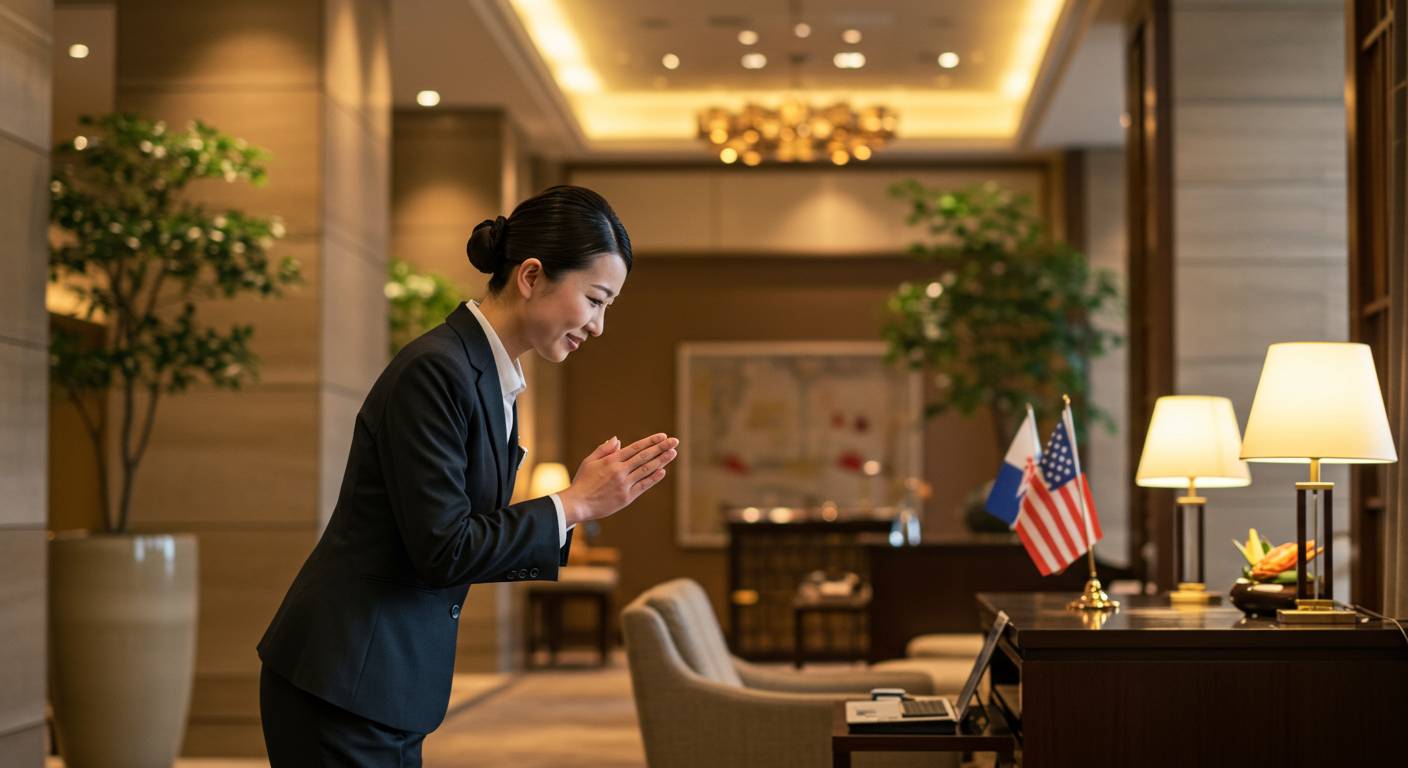
In the world of luxury hospitality, a fascinating evolution is taking place at the intersection of traditional Western service standards and the refined Japanese philosophy of Omotenashi. As more international ultra-high-net-worth individuals discover the exceptional quality of Japanese butler services, the demand for this unique blend of precision, discretion, and anticipatory care has grown exponentially. This blog explores how Japan Butler & Concierge is pioneering a new standard in luxury lifestyle management that combines the best of global traditions with the meticulous attention to detail that defines Japanese hospitality excellence. Whether you’re a discerning traveler planning your next visit to Japan or an expatriate seeking comprehensive lifestyle support, understanding this transformative approach to VIP concierge services will forever change your expectations of what true luxury service entails.
1. How Japanese Omotenashi is Revolutionizing Global VIP Concierge Standards
The concept of “omotenashi” – Japan’s unique approach to hospitality – is silently transforming the global VIP concierge industry. Unlike conventional Western service models that operate on transactional principles, Japanese omotenashi embraces anticipatory service that predicts needs before they arise. This fundamental difference is creating a new gold standard in luxury concierge services worldwide.
At prestigious establishments like The Peninsula Tokyo and Mandarin Oriental Kyoto, staff members undergo intensive training to master the subtle art of non-verbal communication – reading guests’ body language and anticipating desires without intrusion. This approach contrasts sharply with the more direct questioning style common in Western luxury establishments.
What makes Japanese concierge services particularly revolutionary is their seamless integration of technology with human warmth. Companies like Quintessentially Japan and Luxury Experiences Japan are pioneering AI-powered systems that analyze guest preferences while maintaining the human touch that defines true luxury. Their concierges combine data-driven insights with genuine personal connections – remembering not just preferences but life events, family details, and subtle preferences that create truly personalized experiences.
The impact extends beyond traditional hospitality. Financial institutions like Nomura and MUFG now incorporate omotenashi principles into their wealth management services, with dedicated concierges who handle everything from theater tickets to emergency medical arrangements for ultra-high-net-worth clients. This holistic approach to client care represents a significant departure from compartmentalized Western models.
Perhaps most notably, Western luxury brands are increasingly recruiting Japanese hospitality professionals to transform their service cultures. The Four Seasons, Ritz-Carlton, and other premier hotel chains now regularly send management teams to Japan for immersive training in omotenashi principles. The philosophy’s emphasis on genuine care rather than scripted service protocols is proving particularly effective for clients who have “seen it all” and crave authentic connections.
As global affluence rises across Asia and emerging markets, the Japanese approach to VIP concierge services offers a compelling alternative to Western models – one that emphasizes depth of relationship over ostentatious displays of luxury. This subtle revolution in high-end service delivery suggests the future belongs to those who master the art of anticipatory care rather than reactive service.
2. The Secret Methods of Elite Japanese Butlers That Wealthy Travelers Are Now Demanding
The refined techniques of elite Japanese butlers have become increasingly sought after by discerning international travelers. These methods go far beyond standard hospitality services, embodying a unique fusion of meticulous attention to detail and profound respect for guests that is distinctly Japanese.
At the heart of Japanese butler excellence is “kikubari” – the art of anticipation. Elite butlers at establishments like the Mandarin Oriental Tokyo or The Peninsula Tokyo don’t wait for guests to make requests; they observe subtle cues and predict needs before they arise. This might manifest as a perfectly timed cup of tea appearing just as a guest contemplates ordering one, or a forgotten charger discreetly placed in a room before the guest realizes they’ve left it behind.
Another hallmark is “omotenashi” – selfless hospitality without expectation of reward. Unlike Western service models where personality and interaction are often highlighted, Japanese butlers master the art of invisible service. They appear precisely when needed and vanish when privacy is desired, moving with such grace that guests hardly notice their presence. The Ritz-Carlton Kyoto exemplifies this approach, with staff trained to provide seamless service that feels almost supernatural in its timing.
Japanese butlers also incorporate “kaizen” – continuous improvement – into their practice. They maintain detailed guest preference profiles that would impress even the most thorough intelligence agencies. From preferred room temperatures to pillow firmness, beverage choices, and even the specific positioning of items in the room, nothing escapes documentation. Four Seasons Hotel Tokyo at Marunouchi is renowned for maintaining such extensive guest histories that returning visitors often feel the staff can read their minds.
“Kata” – or practiced form – distinguishes elite Japanese butlers from their international counterparts. Every movement is refined through years of practice until it becomes second nature. The way they bow, present items with two hands, and even the angle at which they place objects on a table adheres to precise standards. This disciplined approach creates an atmosphere of calm competence that wealthy travelers increasingly value in our chaotic world.
The integration of seasonal awareness, or “kisetsukan,” into service represents another distinctive feature. Elite Japanese butlers adjust everything from room décor to meal suggestions based on seasonal shifts, creating experiences that connect guests with Japan’s deep appreciation for nature’s rhythms. Hoshinoya Tokyo exemplifies this approach with seasonal kaiseki dining and room elements that subtly transform throughout the year.
As luxury hospitality evolves globally, these distinctly Japanese methods are being incorporated into training programs worldwide. The refined techniques that were once the exclusive domain of Japan’s most prestigious establishments are now reshaping international standards for elite service, proving that the most sophisticated travelers don’t merely seek luxury – they seek the thoughtfulness and precision that Japanese butler traditions have perfected over generations.
3. Why Ultra-High-Net-Worth Individuals Choose Japanese-Trained Concierge Services Over Western Counterparts
Ultra-high-net-worth individuals (UHNWIs) increasingly favor Japanese-trained concierge services for reasons that transcend ordinary luxury expectations. This shift represents a fundamental change in how global elites perceive exceptional service.
The Japanese approach to concierge services embodies “omotenashi” – anticipatory hospitality that borders on the prescient. While Western concierge models excel at responding to requests efficiently, Japanese practitioners anticipate needs before they’re verbalized. For individuals whose time equates to millions, this proactive stance eliminates the cognitive burden of having to articulate desires.
Several distinguishing elements separate Japanese concierge methodologies from their Western counterparts. First, discretion isn’t merely promised but institutionalized. Japanese service professionals operate within a cultural framework where personal information remains sacrosanct. This level of privacy protection appeals particularly to figures from privacy-sensitive industries and public personalities.
Second, Japanese training emphasizes extreme detail orientation. A Mandarin Oriental Tokyo concierge might remember not just a guest’s wine preference but the specific vintage they mentioned in passing conversation months prior. This meticulous information retention creates seamless experiences that Western approaches often struggle to replicate consistently.
The hierarchical respect embedded in Japanese business culture also resonates with UHNWIs. Unlike the sometimes overly familiar Western approach, Japanese concierges maintain appropriate professional distance while delivering warmth. This balance particularly appeals to traditional wealth from the Middle East, Russia, and old European money.
Furthermore, Japanese concierge training incorporates aesthetic sensibilities that distinguish their service delivery. The concept of “ma” (negative space) translates into knowing when not to intrude—a sophisticated understanding that wealth doesn’t always desire constant attention.
Many elite clients report that Japanese-trained professionals demonstrate remarkable crisis management capabilities. When unexpected situations arise, their composed problem-solving approach—without displaying stress or transferring anxiety to clients—stands in stark contrast to more emotionally expressive Western counterparts.
Major luxury brands recognize this preference shift. Peninsula Hotels, Four Seasons, and Aman Resorts now specifically recruit Japanese-trained concierge staff for their flagship properties worldwide. The Ritz-Carlton’s leadership training program has incorporated elements from Japanese hospitality traditions into their global standards.
For UHNWIs seeking experiences beyond material acquisition, Japanese concierges excel at facilitating access to the truly exclusive—private viewings at cultural institutions, meetings with master craftspeople, or entry to invitation-only events. Their extensive relationship networks within Japan’s traditionally closed luxury circles provide access that Western concierges often cannot match.
This preference trend continues accelerating as global wealth increasingly originates from Asia, where Japanese service standards have long been the regional benchmark for excellence. As one Swiss private banking executive noted, “Our most discerning clients now specifically request staff with Japanese hospitality training. The difference is immediately apparent to those who operate at this level.”
