
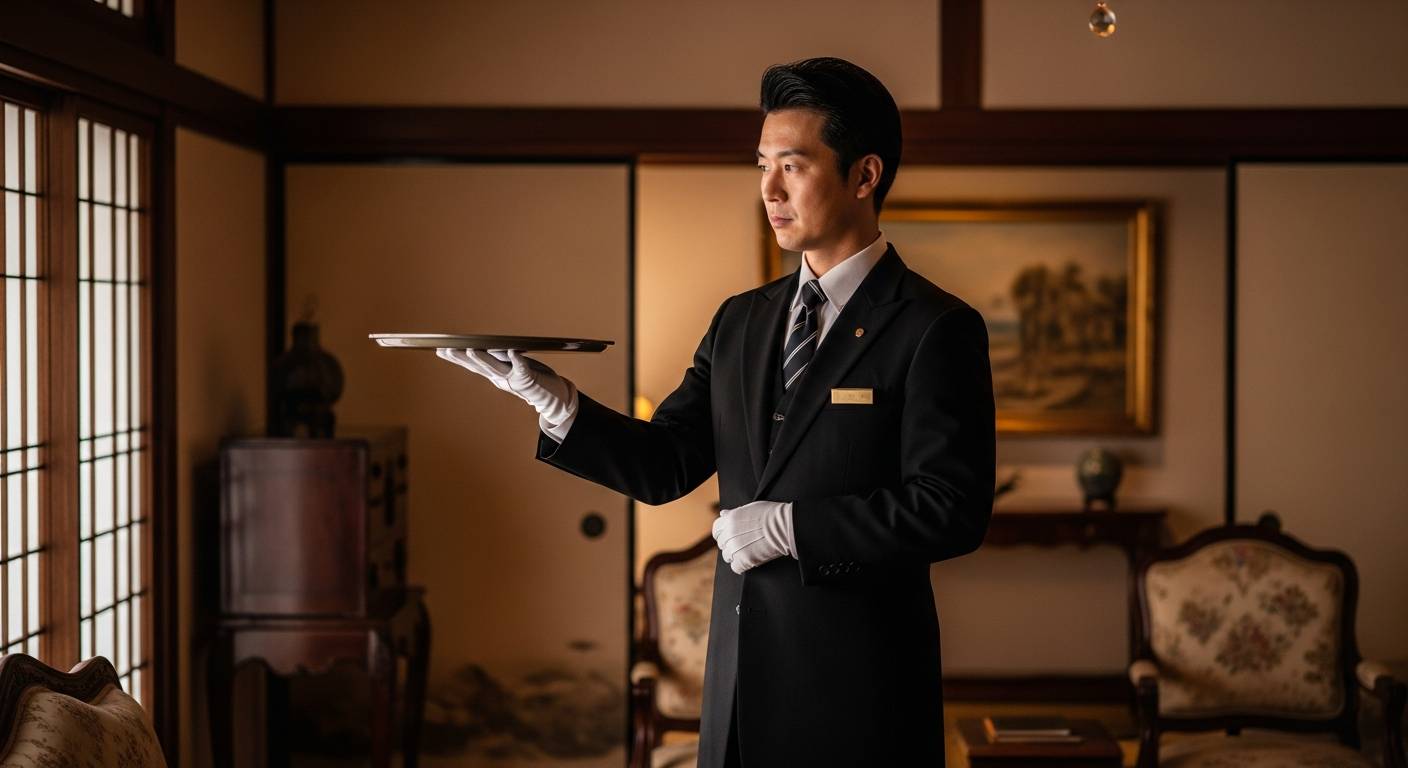
In the rarified world of ultra-luxury service, a remarkable trend has emerged over the past decade – the rising global demand for Japanese-trained butlers and concierge professionals. This phenomenon extends beyond mere preference and reflects a deeper appreciation for the unique cultural intelligence embedded in Japan’s hospitality tradition. As international High-Net-Worth Individuals (HNWIs) increasingly seek personalized service that transcends cultural boundaries, Japanese butlers have become the gold standard in discretion, anticipatory service, and cross-cultural finesse. This article explores the distinctive qualities that make Japanese butlers exceptionally valuable in today’s interconnected luxury landscape, examining how the principles of omotenashi (Japanese hospitality) blend with modern service requirements to create an unparalleled client experience. Whether you’re a luxury service professional, a hospitality executive, or simply fascinated by cross-cultural excellence, this deep dive into Japanese butler expertise reveals why cultural intelligence has become the most coveted skill in premium service delivery worldwide.
1. The Secret Code: How Japanese Butlers Master Cultural Intelligence to Serve Global Elite
In the exclusive world of ultra-luxury service, Japanese butlers have established themselves as the gold standard for high-net-worth individuals seeking discretion, precision, and cultural finesse. What distinguishes these professionals from their Western counterparts isn’t just technical skill but a profound cultural intelligence that transcends borders and expectations. This unique capability—to read social situations, anticipate needs across cultural contexts, and adjust service styles instantaneously—has made Japanese butlers increasingly sought-after among international elites.
The foundation of Japanese butler excellence lies in the concept of “kuuki wo yomu” (reading the air)—an intuitive understanding of unspoken social cues. Unlike Western service traditions that emphasize verbal communication, Japanese service culture prioritizes anticipatory awareness. This means elite Japanese butlers can detect a client’s needs before they’re articulated, creating a seamless experience that feels almost telepathic to recipients.
At prestigious establishments like the Ritz-Carlton Tokyo and Four Seasons Kyoto, butler training incorporates elements from traditional Japanese hospitality concepts such as “omotenashi” with rigorous international service protocols. This fusion creates professionals who can navigate both Eastern and Western sensibilities with equal sophistication. Their training involves understanding not just the mechanics of service but the psychological and cultural dimensions of luxury experiences across different contexts.
One particularly valuable skill is what industry insiders call “cultural code-switching”—the ability to adjust service styles instantaneously depending on whether they’re serving Middle Eastern royalty, American tech billionaires, or European aristocrats. A Japanese butler understands that an Arab client may value warm, personalized interactions while a Northern European might prefer efficient, less intrusive service. This cultural intelligence extends to understanding dietary preferences, communication styles, and even spatial awareness that varies dramatically across cultures.
For the global elite who maintain residences across multiple countries, this adaptability is invaluable. A Japanese butler can transform a Tokyo penthouse, London townhouse, or Dubai villa into a space that feels culturally appropriate yet consistently luxurious for its owner, regardless of their background. This skill set comes at a premium, with experienced Japanese butlers commanding salaries that can exceed $250,000 annually at the highest levels of private service.
2. Beyond Service: Why HNWIs Around the World Are Competing for Japanese-Trained Butler Talent
The global demand for Japanese-trained butlers has reached unprecedented levels among High-Net-Worth Individuals (HNWIs). This isn’t merely a passing trend but represents a profound shift in what the ultra-wealthy expect from household staff. Japanese butlers bring a unique combination of qualities that have become increasingly valuable in international estates and residences.
At the core of their appeal is the concept of “omotenashi” – the distinctive Japanese approach to hospitality that emphasizes anticipation of needs before they’re expressed. Unlike Western service traditions, which often operate on request-based protocols, Japanese butlers work within a framework of intuitive care. This means understanding the rhythms and preferences of their employers so thoroughly that needs are met seamlessly, often before the employer realizes they have them.
Major recruitment agencies like Irving Scott and Quintessentially People report that Japanese-trained butlers command premium salaries, often 30-40% higher than their counterparts. These professionals blend traditional butler skills with cultural intelligence that proves invaluable for HNWIs with global business interests and diverse social circles.
The Japanese butler’s training emphasizes exceptional attention to detail – from the precise temperature of a beverage to the subtle arrangement of fresh flowers that changes with the seasons. This meticulous approach extends to managing household affairs with discretion and efficiency. For example, a Japanese-trained butler might adjust the household schedule based on subtle cues in an employer’s behavior rather than waiting for explicit instructions.
Privacy and discretion are paramount virtues in Japanese service culture, making these professionals particularly valuable to celebrities and business leaders. In an age where personal information is increasingly vulnerable, Japanese butlers maintain strict confidentiality protocols that go beyond standard NDA agreements. This cultural predisposition toward privacy protection becomes an invaluable asset for employers whose lives are constantly under scrutiny.
The adaptability of Japanese butlers also distinguishes them in the marketplace. Having trained in a culture that values harmony and flexible thinking, they navigate complex multicultural environments with exceptional grace. This becomes particularly important for HNWIs who maintain residences across multiple countries and entertain guests from diverse cultural backgrounds.
For many wealthy families, Japanese butlers serve as cultural ambassadors who can introduce elements of Japanese aesthetic and philosophy into Western households. From the art of ikebana (flower arrangement) to the principles of zen minimalism in organizing spaces, these professionals bring a distinct sensibility that elevates everyday living to an art form.
The competition for top Japanese butler talent has intensified as training institutions like the Tokyo Butler Academy can only produce a limited number of graduates each year. This scarcity, combined with growing demand, has transformed these professionals into luxury service commodities in their own right – prestigious additions to households that value the subtle perfection of truly exceptional service.
3. Cultural Intelligence Mastery: The Japanese Butler Approach That’s Transforming Luxury Service Worldwide
The global luxury service industry is experiencing a remarkable transformation led by Japanese butlers who have mastered the art of cultural intelligence. This unique approach to service has captured the attention of High Net Worth Individuals (HNWIs) worldwide, creating unprecedented demand for Japanese-trained household staff.
Cultural intelligence—the ability to adapt seamlessly across diverse cultural contexts—has become the defining characteristic that sets Japanese butlers apart in the international luxury service landscape. What makes this approach so effective is its foundation in several distinctly Japanese principles.
At its core, Japanese butler service emphasizes “kuuki wo yomu” (reading the air)—an intuitive ability to anticipate needs before they’re verbally expressed. This skill transcends language barriers and allows Japanese butlers to provide impeccable service regardless of cultural background. One HNWI from the Middle East noted: “My Japanese butler understands my preferences better than staff who share my native language.”
The concept of “omotenashi”—selfless hospitality without expectation of reward—further elevates Japanese butler service. Unlike Western approaches that might emphasize performative gestures, Japanese butlers focus on authentic care that feels natural rather than transactional. The Ritz-Carlton in Tokyo has incorporated these principles into their staff training programs, resulting in service ratings that consistently outperform their global counterparts.
Japanese butlers also excel at cultural code-switching—adjusting their service style to match the cultural expectations of their employers while maintaining their core values of precision and discretion. Whether serving traditional Japanese kaiseki to visiting dignitaries or coordinating a Western-style dinner party, they navigate cultural nuances with remarkable fluidity.
Major butler academies like the International Butler Academy Japan have developed specialized cultural intelligence modules that are now being adopted by luxury service schools worldwide. Their methodology combines traditional Japanese service philosophy with contemporary global standards, creating versatile professionals who can operate effectively anywhere.
The impact of this cultural intelligence mastery extends beyond individual service. Japanese butlers are increasingly hired as household managers and service trainers, where they implement systems that transform entire service teams. For instance, several private estates in Monaco and Switzerland now operate entirely according to Japanese service protocols, regardless of staff nationality.
As global wealth continues to flow across borders, the demand for culturally intelligent service professionals will only increase. The Japanese butler approach represents not just a service standard but a sophisticated methodology for navigating our interconnected world with grace and understanding.