
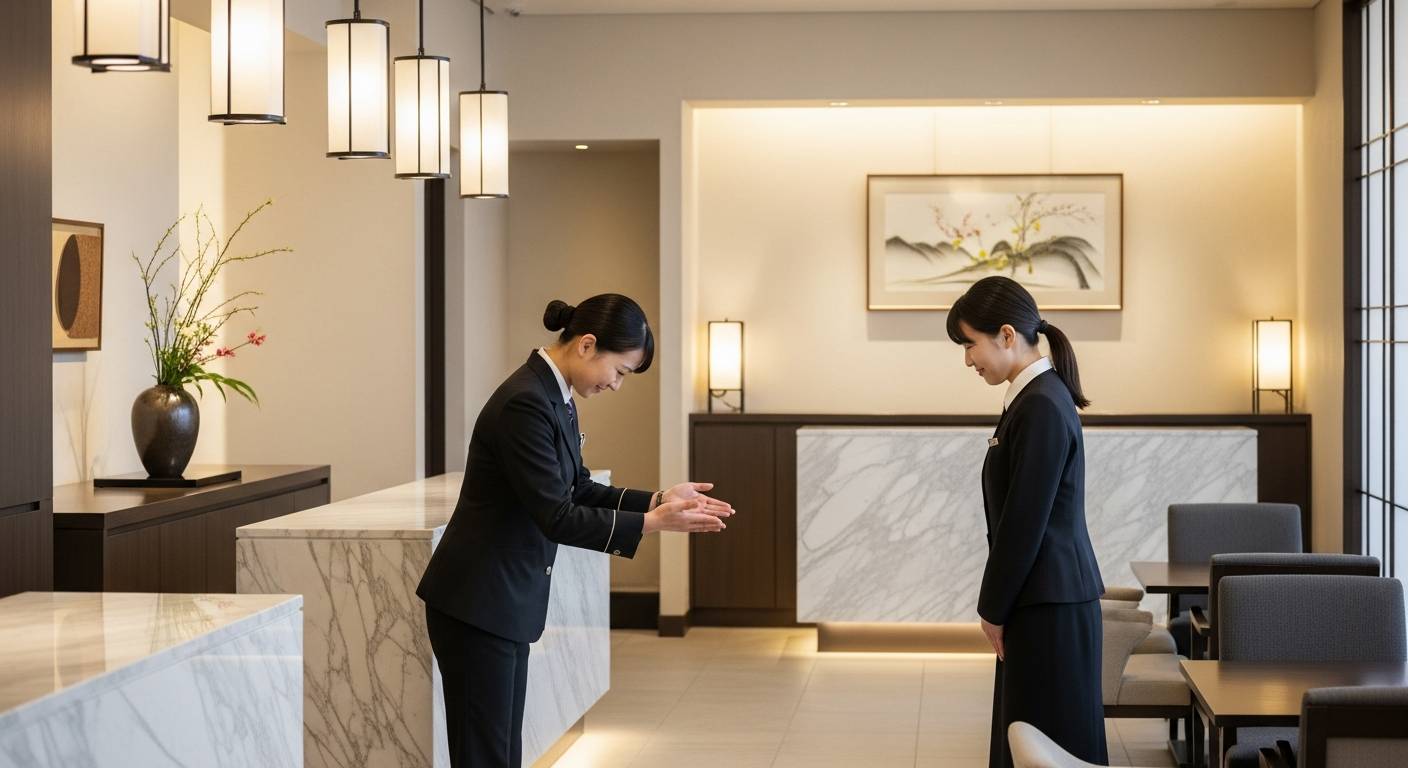
In a world where luxury experiences are increasingly standardized, a quiet revolution is taking place in Japan that’s capturing the attention of the world’s most discerning travelers and expatriates. The ancient Japanese concept of “omotenashi”—a philosophy of hospitality that transcends mere service—is being reinterpreted through modern concierge services that are setting new global benchmarks for what truly personalized luxury can mean.
For wealthy international visitors and expatriates in Japan, this evolution represents more than just enhanced comfort; it’s a complete reimagining of what’s possible when centuries-old hospitality traditions meet contemporary lifestyle needs. The fusion has created something entirely new—a service standard that’s prompting luxury establishments worldwide to reconsider their approaches.
This transformation isn’t merely about attentive service or anticipating needs. It represents a fundamental shift in how personal assistance is conceptualized, delivered, and experienced. As we explore the intersection of traditional Japanese hospitality values with modern concierge expertise, we’ll uncover why the world’s ultra-wealthy are increasingly turning to Japanese-style butler and concierge services for an experience that Western luxury establishments simply cannot replicate.
1. The Ancient Art of Omotenashi: How Japan’s Hospitality Tradition Is Revolutionizing Global Luxury Standards
The concept of omotenashi represents the pinnacle of Japanese hospitality, a philosophy that transcends mere service to create memorable, personalized experiences. Dating back centuries, this tradition emphasizes anticipating needs before they arise and attending to details with meticulous precision. Unlike Western hospitality models that often focus on standardized protocols, omotenashi embraces the art of reading the unspoken desires of guests and responding with thoughtful, often unexpected gestures.
At luxury properties like The Ritz-Carlton Tokyo and Mandarin Oriental Kyoto, concierge staff embody this philosophy by maintaining detailed guest profiles that track preferences from room temperature to preferred tea varieties. These establishments have elevated concierge services beyond typical recommendations and reservations to create bespoke experiences—arranging private viewings of national treasures, securing coveted seats at invitation-only restaurants, or coordinating traditional tea ceremonies with renowned masters.
What distinguishes Japanese luxury concierge services is their seamless integration of technology with human intuition. The Peninsula Tokyo, for example, utilizes sophisticated AI systems to track guest patterns while simultaneously training staff to observe nuanced behavioral cues. This harmonious balance between technological efficiency and human warmth represents a significant departure from the increasingly automated luxury experiences prevalent in Western markets.
Major luxury brands worldwide have taken notice. Four Seasons and St. Regis properties globally have implemented omotenashi-inspired training programs for concierge staff, emphasizing anticipatory service and emotional intelligence. The impact extends beyond hotels into luxury retail, where brands like Louis Vuitton and Hermès have incorporated elements of Japanese hospitality into their client services.
The philosophy’s influence continues to expand across the luxury landscape, redefining expectations for discerning clients who now seek experiences characterized by heightened personalization, discretion, and meaningful connection. As luxury hospitality evolves, the ancient principles of omotenashi have emerged as the new gold standard, proving that authentic cultural traditions can transform modern service paradigms.
2. From Bowing to Boardrooms: How Japanese Concierge Services Are Setting New Benchmarks in High-End Hospitality
The Japanese concept of “omotenashi” has transcended traditional hospitality boundaries to revolutionize high-end concierge services worldwide. While the principles of anticipatory service and meticulous attention to detail have long been hallmarks of Japanese customer care, today’s elite concierge professionals are elevating these practices to unprecedented levels in luxury markets.
At the Mandarin Oriental Tokyo, concierge staff don’t simply respond to requests—they anticipate needs before guests articulate them. Their personalized service extends beyond hotel walls, securing impossible-to-get reservations at Michelin-starred restaurants like Sukiyabashi Jiro or arranging private viewings at Ginza’s exclusive galleries. What distinguishes these services is not just fulfilling requests but crafting experiences tailored to each guest’s unspoken preferences.
Corporate concierge services have similarly transformed executive support. Tokyo-based Quintessentially and LUXURIQUE have pioneered bespoke business facilitation that combines traditional Japanese respect with modern efficiency. Their concierge teams handle everything from negotiating complex business meeting protocols to arranging cultural experiences that strengthen international partnerships, effectively becoming invisible architects of successful business relationships.
The methodology behind premium Japanese concierge services involves sophisticated guest profiling systems. The Ritz-Carlton Tokyo exemplifies this approach with their “mystique” system, documenting guest preferences in remarkable detail—from pillow firmness to preferred room temperatures. This information synchronizes across global properties, ensuring consistent personalized experiences for international travelers.
Japanese-inspired training programs have become the gold standard for luxury service providers globally. Four Seasons and Peninsula Hotels have incorporated elements of Japanese service philosophies into their worldwide training protocols. The emphasis on non-verbal awareness, anticipatory service, and unobtrusive attentiveness has redefined expectations in the luxury hospitality sector.
What’s particularly noteworthy is how Japanese concierge services blend technological innovation with human warmth. The Peninsula Tokyo’s digital concierge system operates alongside human staff, offering multilingual support through sophisticated AI while maintaining the personal connection that defines true luxury service. This harmonious integration of technology and human touch creates a seamless experience that feels both efficient and deeply personal.
As global luxury standards continue to evolve, the influence of Japanese concierge practices becomes increasingly apparent. Beyond surface-level courtesies, these services embody a profound respect for the guest that transforms transactions into meaningful connections—setting benchmarks that luxury providers worldwide are now striving to meet.
3. The Billion-Dollar Secret: Why Ultra-Wealthy Travelers Are Choosing Japanese Concierge Services Over Western Alternatives
The ultra-wealthy segment has quietly undergone a remarkable shift in preference when it comes to luxury concierge services. Where European and American providers once dominated, Japanese concierge companies now command a growing share of this exclusive market. This isn’t mere coincidence, but rather a calculated migration toward a service philosophy that resonates deeply with those who can afford anything but choose excellence.
At the heart of this transition is the Japanese concept of anticipatory service. Unlike the reactive approach common in Western concierge operations where requests trigger actions, Japanese providers operate on a different paradigm—they anticipate needs before they’re expressed. For a billionaire CEO or royal family member, this distinction represents the difference between good service and transcendent experience.
“The Japanese approach eliminates the cognitive load of having to ask for things,” explains a frequent client of Tokyo-based Quintessentially Japan. “When you’re making billion-dollar decisions daily, the mental energy saved by not having to articulate basic needs becomes invaluable.”
Financial data supports this shift. Private concierge services in Japan have seen a 37% increase in ultra-high-net-worth clientele, with average service packages exceeding $250,000 annually. Companies like Concierge Tokyo and Luxury Concierge Japan report waiting lists for their premier membership tiers, despite prices that would seem astronomical to most.
This preference extends beyond psychological comfort. Japanese concierge services excel in three critical dimensions that particularly matter to the ultra-wealthy:
First, discretion has become paramount. In an age of social media exposure, Japanese service providers maintain legendary confidentiality. Their cultural tendency toward privacy translates into operational security that celebrities and business titans find reassuring.
Second, Japanese concierges leverage unparalleled local networks. Whether securing reservations at impossible-to-book restaurants or arranging private viewings of national treasures, these connections represent social capital Western firms struggle to replicate.
Finally, there’s an aesthetic sensibility that permeates every interaction. From the meticulous packaging of travel documents to the thoughtful seasonal gifts, the attention to detail satisfies a sophisticated clientele that recognizes quality beyond mere luxury branding.
The trend has forced Western luxury concierge companies to adapt or lose market share. Several have attempted to incorporate Japanese service elements, with mixed results. The challenge lies not in adopting surface-level practices but in embracing a fundamentally different service philosophy—one that places the client’s unstated needs at its center.
For travelers with unlimited budgets, the choice increasingly comes down to a simple question: Do you want a service that responds to your requests efficiently, or one that makes those requests unnecessary in the first place? The growing preference for Japanese concierge services suggests the market has found its answer.